Trust
About Gamma, AI presentation workspace
Gamma is an AI presentation workspace built for people who already know what they need to say and need structure under time pressure. You describe audience, goal, length, and the proof you already have. Gamma drafts a structured outline, then editable slides you can present in the browser or export when the room requires a file. We are not building a chat window that dumps paragraphs onto a canvas. We are building a place where the argument stays editable until the meeting starts. The hard part of most decks is rarely finding a prettier template. It is getting the narrative right before you polish pixels: what decision the room must make, which facts survive a follow-up, and what to cut.
Prompt → outline → slides
1. Prompt
Audience, goal, length, proof you already have.
2. Outline
- • Opening claim
- • Proof beats
- • Ask / next step
3. Slides
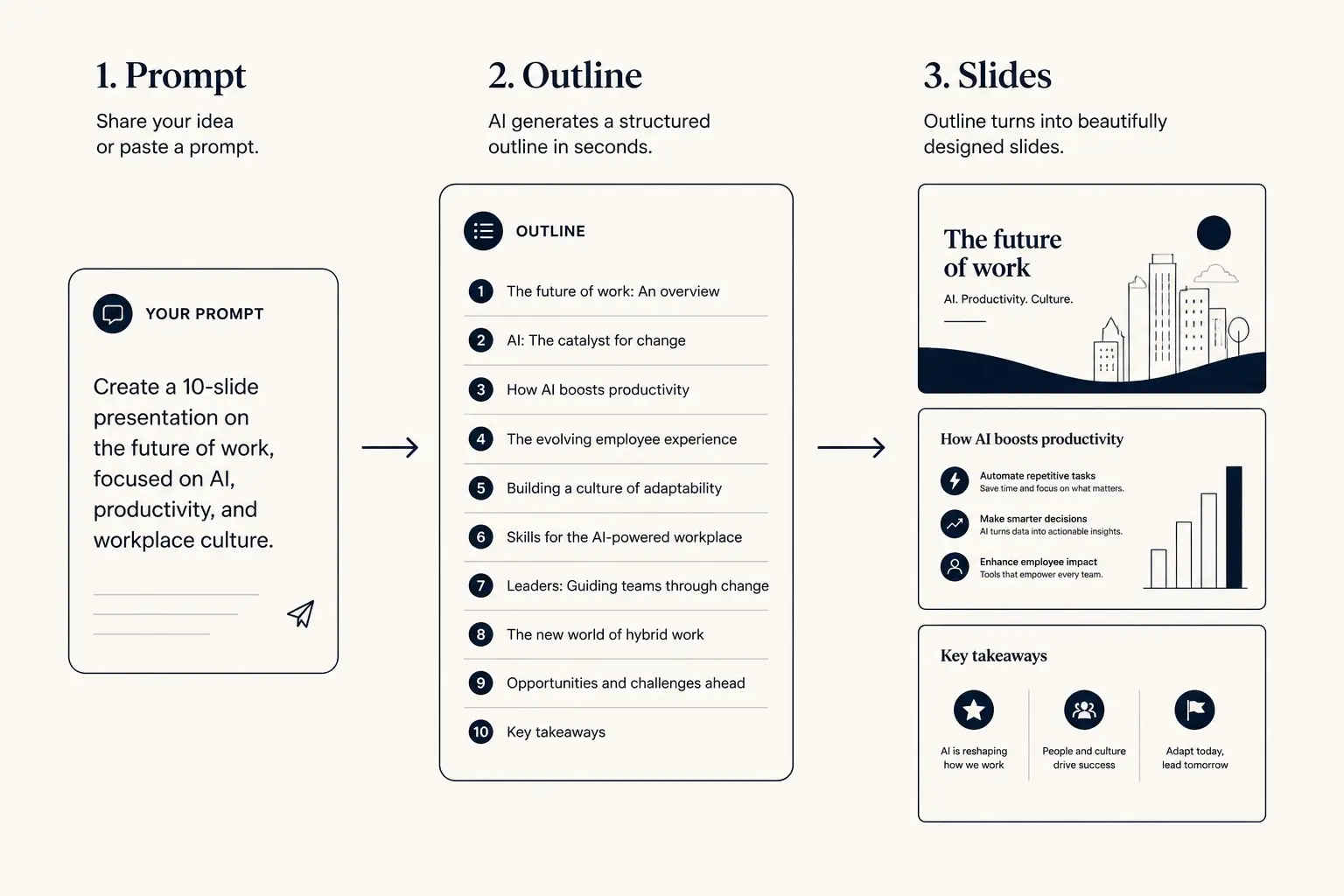
Why we start with the outline
Most AI slide tools jump straight to layouts. That produces decks that look finished and argue nothing. Outline-first drafting forces the painful questions early: Is the problem felt? Is the ask clear? Are the metrics real? You can rewrite the outline before or after slides appear. Editing is not an afterthought; it is the product. Practically, that means a founder can move traction before product, a seller can swap the pain slide after discovery, and a PM can lead with the recommendation instead of a status tour. If a tool regenerates and wipes those edits, it fails the job even if the first screenshot was gorgeous. We score that failure mode publicly on the method page.
Read the rubric: /method.
Weak slide → strong slide
Before
- • Overview
- • Features
- • Next steps???
After
- • Cost of status quo
- • Wedge in one claim
- • Proof + decision ask
Who Gamma is for, and who it is not
We optimize for clarity under time pressure: a usable draft in minutes, not a blank canvas. Typical users are preparing a seed pitch, a buyer demo, a product review, a QBR, an investor update, or a classroom talk. They bring facts. Gamma brings structure and a first layout they can attack. Gamma is not for you if your primary requirement is a rigid enterprise brand kit with locked masters across hundreds of employees, or if you must live inside PowerPoint as the only system of record every day. In those cases, brand-kit tools or PowerPoint-native assistants may fit better, and our compare hub should say so in job language, not trophy language. We also do not pretend AI replaces a designer for a keynote that needs custom illustration and stage craft.
Compare hub: /compare.
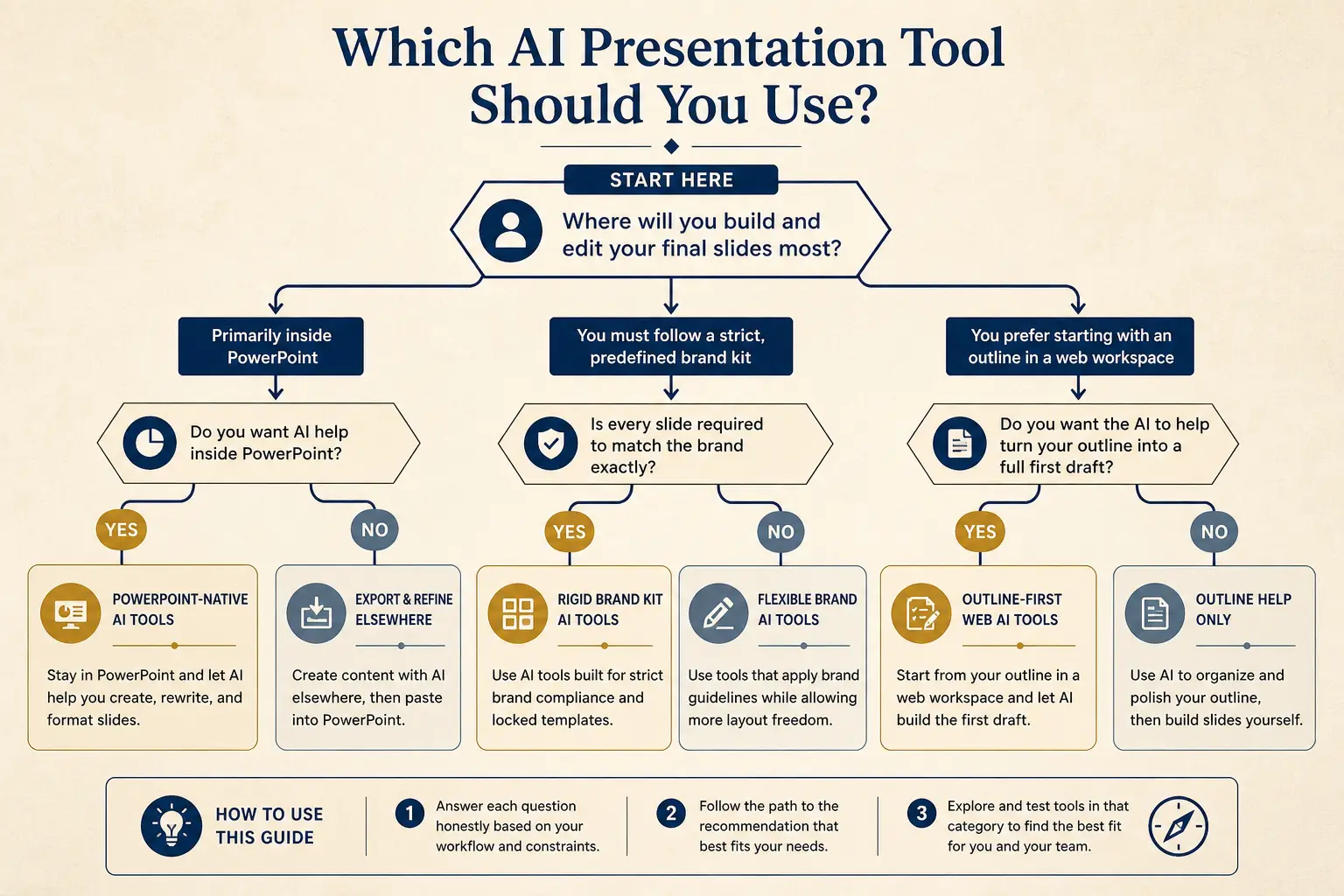
What we optimize for
We optimize for structure under deadline, editability without starting over, honest tradeoffs between present links and exports, and job-specific defaults for pitch, sales, review, and teaching decks. One generic professional-deck prompt is how you get slide soup. Present links are often better than exports; we say when PPTX is the right artifact and when it is cleanup debt. Every generated slide should be something you can fix without losing prior edits. Section order should match the decision the meeting needs, not a pile of decorated slides.
Time-to-usable-deck
Blank PPT path
Outline in docs → design fight → rebuild → 3–8 hours
Outline-first AI path
Prompt → edit outline → generate → polish → minutes to first usable draft
How we talk about the category
Presentation tools are easy to demo and hard to trust. A thirty-second video can hide brittle editing, broken exports, and outlines that collapse the moment you change a slide. That is why we publish a public evaluation rubric, ship annotated examples, and write compares that include choose-the-other-tool sentences. EEAT is not a badge in the footer. It is whether a skeptical buyer can reproduce our claims. We date claims. We do not invent competitor pricing. We link outbound when we cite a product behavior. When Gamma is weak on an axis, for example rigid brand systems, the score should say so. If marketing ever outruns product, Honesty on the rubric drops.
Examples gallery: /examples.
Evaluation rubric axes
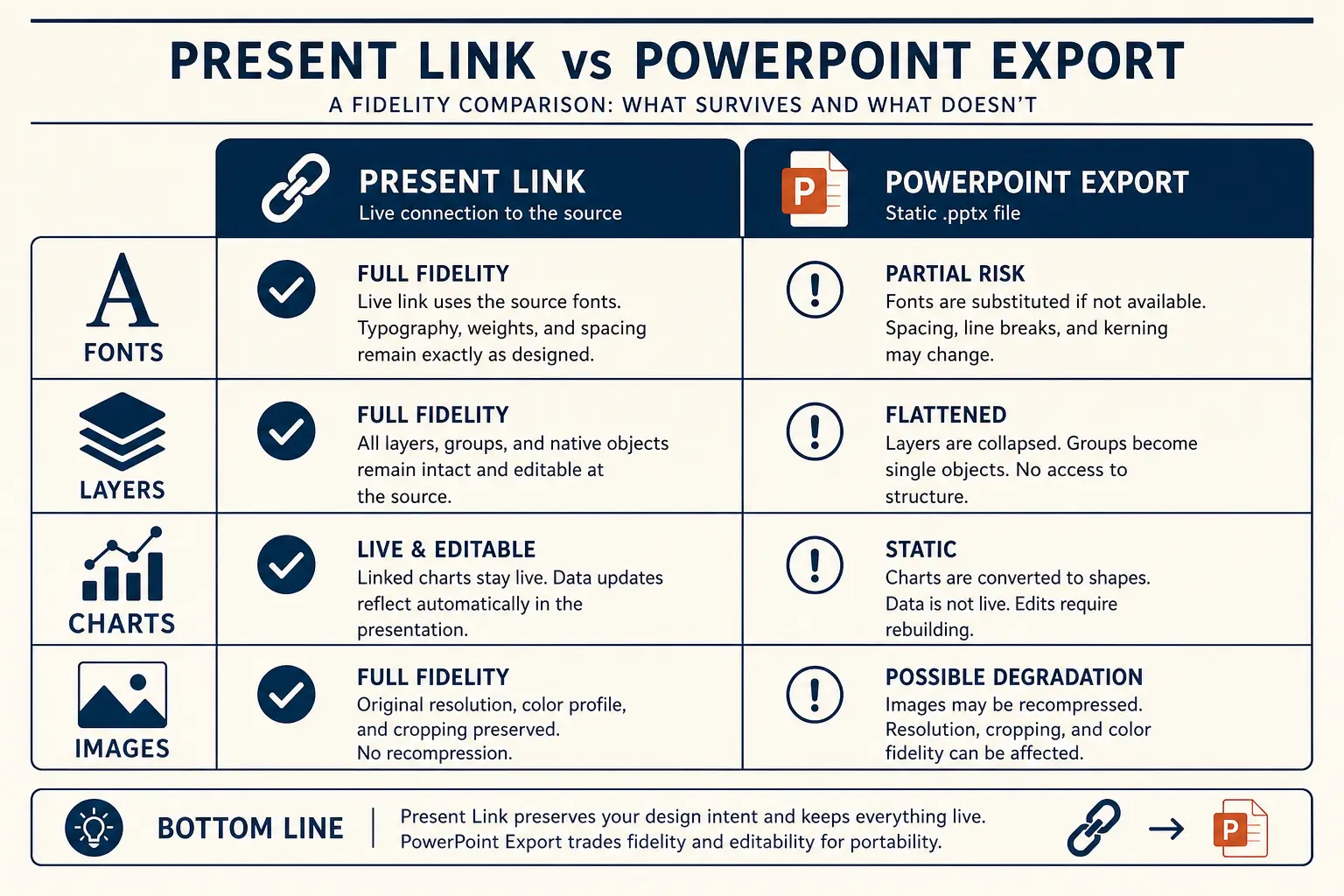
Argument, Artifact, Edit
Original framework we use internally: Argument, Artifact, Edit. Argument is the decision and proof. Artifact is present link, PDF, or PPTX. Edit is the forced change that proves the tool is usable under deadline. Skip any leg and you buy screenshots. Teams that standardize without this framework recreate their old pain inside a new logo within two sprints.
A worked day in the product
Example day: Maya is raising a two-point-five million dollar seed for a B2B workflow tool. She has three traction metrics with dates, a clear wedge, and a messy Notion doc. She opens Gamma with audience seed investors in vertical SaaS, a ten-slide constraint, must-include facts, and the ask. Gamma proposes an outline. She moves traction before product, kills a generic TAM wall, and regenerates only the sections that changed. She presents from a link in the partner meeting, then exports PPTX for the associate who asked for a leave-behind, expecting a cleanup pass, not pixel-perfect PowerPoint magic. That day is the product thesis: AI accelerates the draft; humans keep accountability for facts and the ask; the tool must survive the forced edit. If your workflow ends with regenerate everything and hope, you are using the wrong loop.
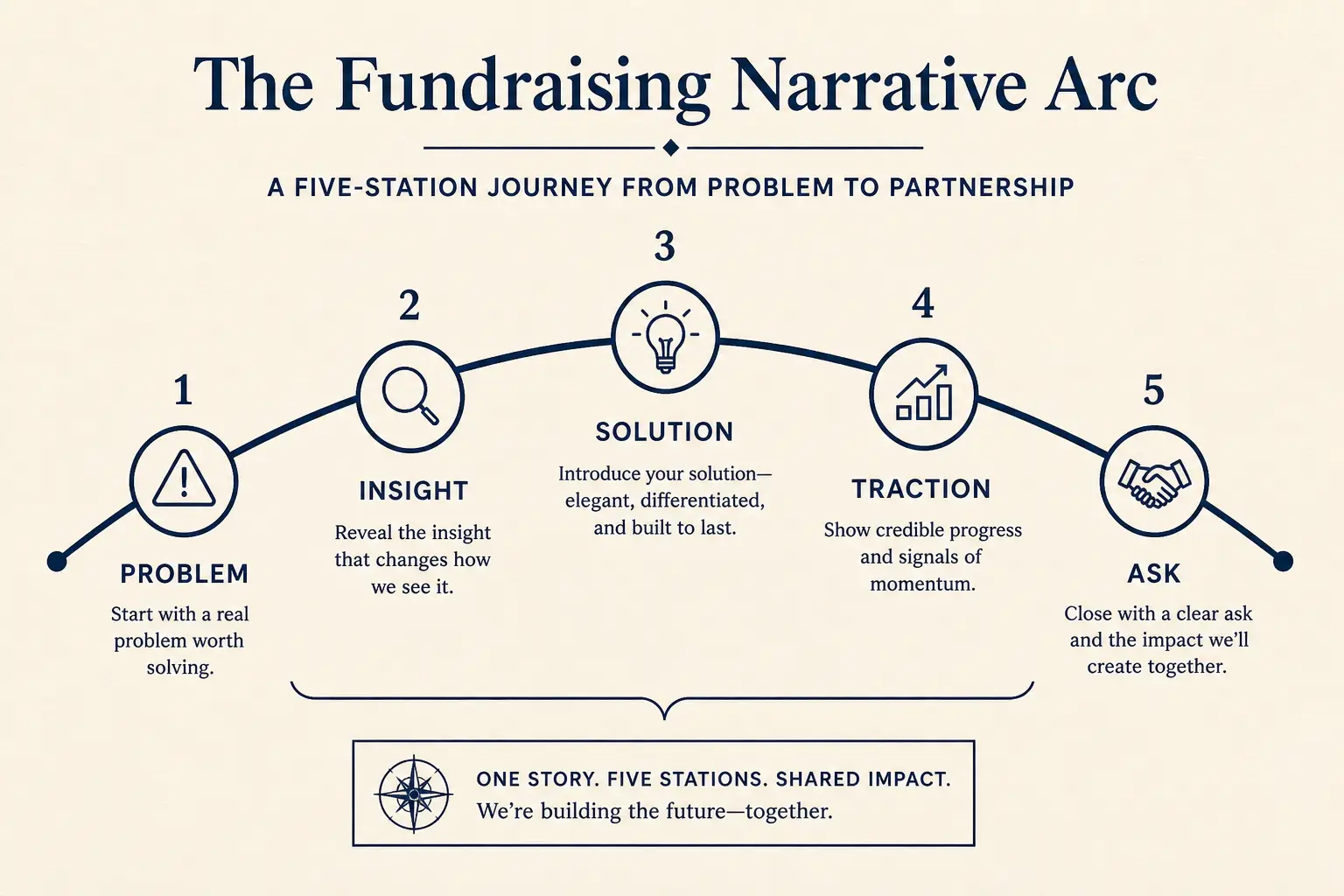
Fundraising narrative arc
Tension early. Proof before the ask. Titles should skim as a story.
How to evaluate us without believing the homepage
Run one real job. Use the same brief you would give a competitor. Force an edit: change the narrative, swap a metric, add a slide. Present the way your room works. Export if you must. Then write one sentence: who should pick Gamma, and who should pick something else. Cross-check that sentence against our evaluation method and a live compare. If our marketing and your scorecard disagree, trust the scorecard and tell us. For craft depth, start in learn hubs. For product entry, use the AI presentation maker or jump to a job page like the AI pitch deck generator. Browse examples when you want annotated shapes before you draft.
Start drafting: AI presentation maker or AI pitch deck generator. Craft map: /learn.
Failure modes we refuse to paper over
Failure modes we refuse to paper over include fluent slides with invented metrics or customer quotes, pretty first drafts that cannot absorb a narrative reorder, export promised as identical when cleanup is still required, one generic prompt used for pitch sales and classroom jobs, and category claims without a dated method or job-specific winner. If you catch us drifting into any of those, the fix is product and editorial, not a louder slogan. Useful decks are owned arguments with scaffolding. Gamma's job is the scaffolding.
Concrete next step
Concrete next step in Gamma: pick the job you have this week, describe audience and decision in one paragraph, paste three real facts with dates, generate an outline, force one reorder, then present from a link before you touch export. That loop teaches the product faster than any homepage claim. Bring the same brief you would use to score a competitor so the comparison stays fair. Time box outline edits before you polish pixels so design cannot hide a weak story.
Gamma exists so the first usable draft arrives while the meeting is still on the calendar. We will keep publishing method, examples, and job-based compares so buyers can disagree with us using the same axes. If you only remember one sentence from this page, remember this: outline first, facts owned by humans, present link when you can, export when the room requires a file, and never confuse a pretty thumbnail with a tool that survives the forced edit. That is the whole product promise in one breath. Start with a real meeting already on the calendar this week.
Frequently asked questions
Try the outline-first workflow
Describe your audience and goal. Gamma drafts structure and slides you can edit before you present.