Blog
Gamma blog: AI decks & slide craft
The blog is Gamma's long-tail engine. Canonical topical guides live under /learn hubs. Blog posts go narrower: stage, industry, persona, objection, or migration scenario, the searches that do not deserve their own money page but still need a serious answer with a reusable framework.
Each post should teach a decision, include a worked example with specifics, and link up to its parent hub or spoke plus across to a product page. We do not publish thin keyword pages. If a post cannot change what you put on a slide this week, it should not ship.
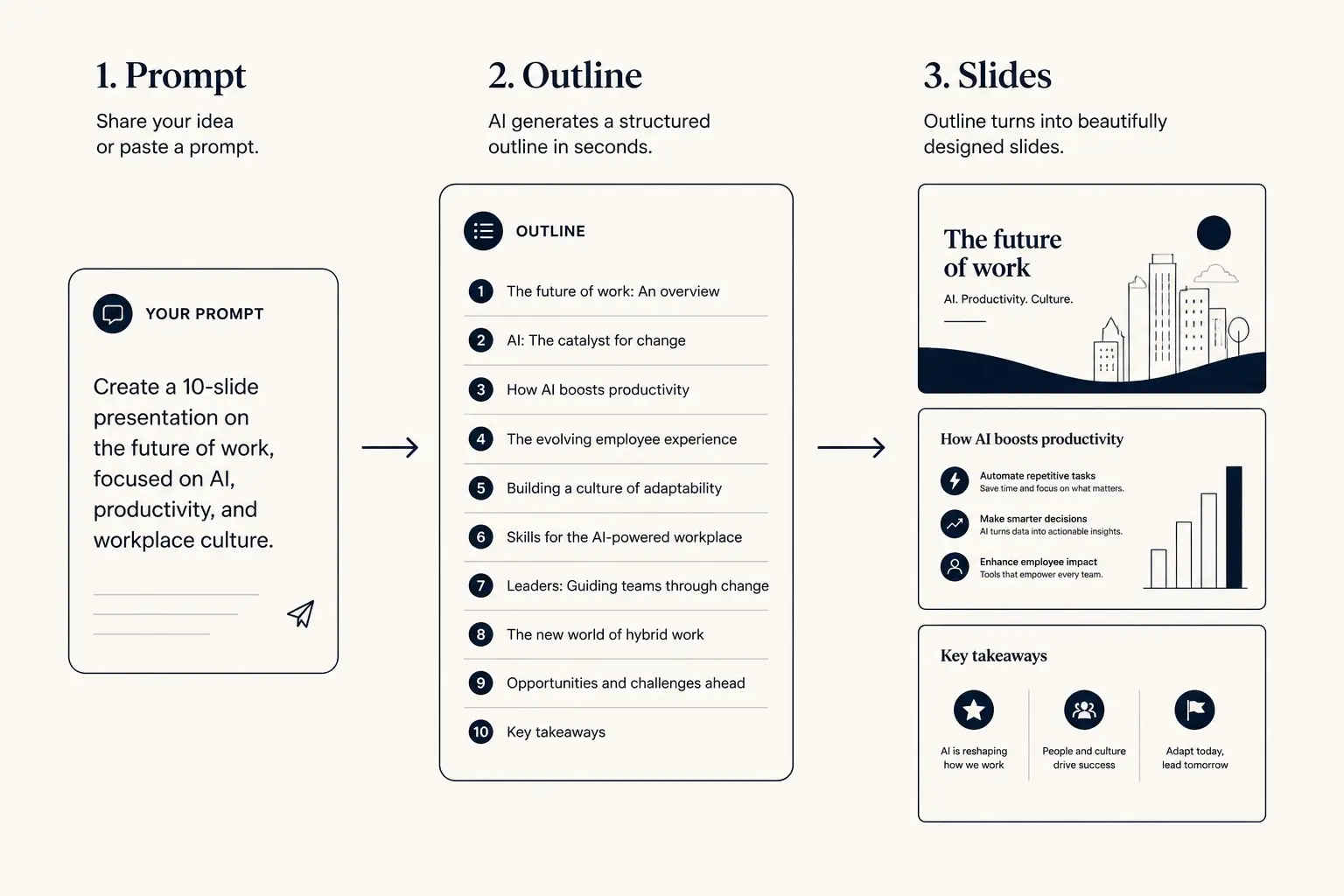
Prompt → outline → slides
1. Prompt
Audience, goal, length, proof you already have.
2. Outline
- • Opening claim
- • Proof beats
- • Ask / next step
3. Slides
How to use the blog
Arrive with a constraint: “Series A checklist,” “churn in a QBR,” “ChatGPT outline into a real deck.” Skim the answer block, steal the framework, then draft in Gamma with your facts. Do not collect posts the way people collect templates, finish one scenario end-to-end, including a forced edit.
When a post compares tools or migrations, cross-check claims against /method. Undated “best AI” language without a job and a rubric is noise. Prefer posts that name who should pick the other tool.
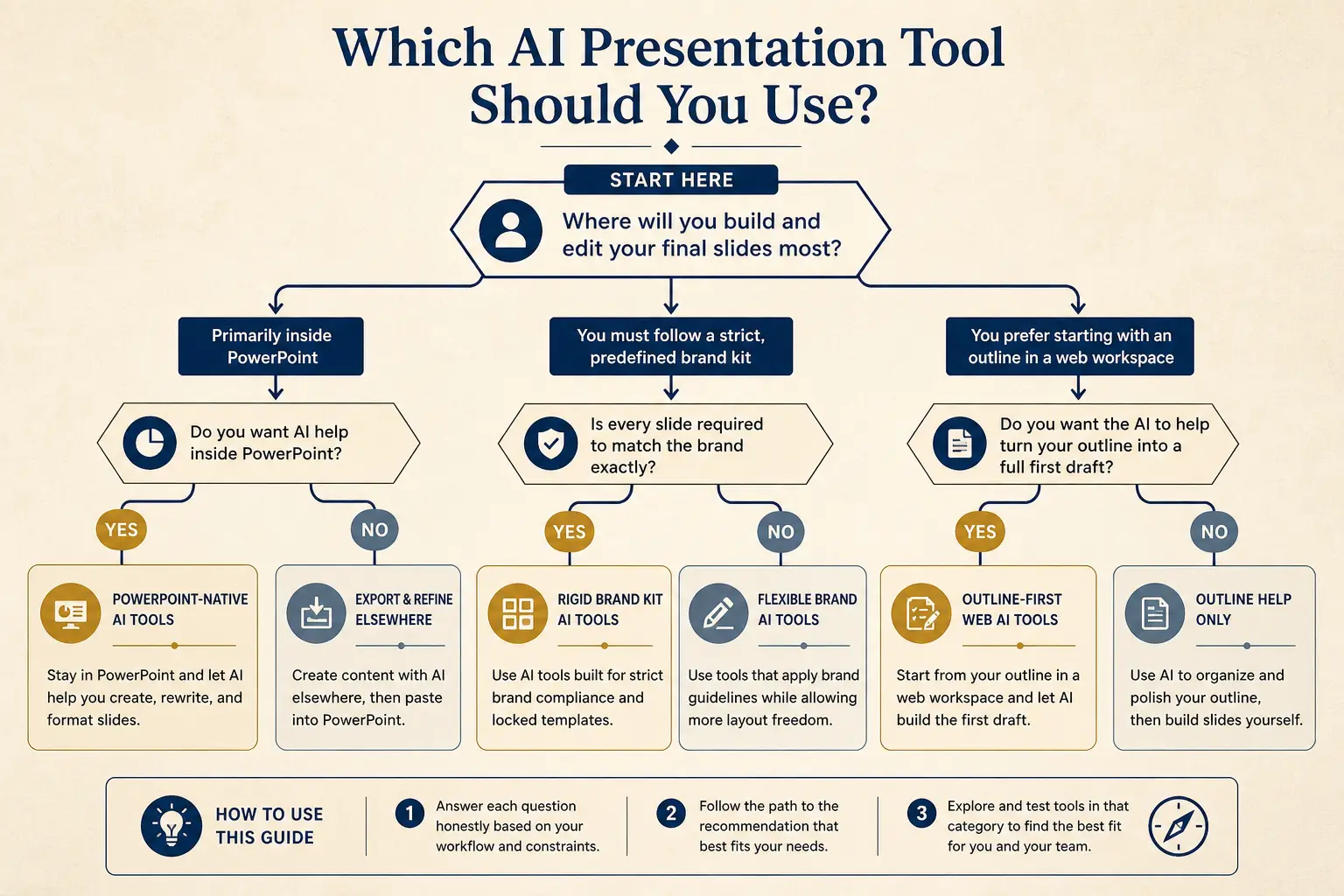
Which tool for which job
Need native PowerPoint editing every day?
Yes → Plus AI / Copilot · No → continue
Need rigid brand kits across a large team?
Yes → Beautiful.ai / enterprise kits · No → continue
Need outline-first AI drafting + present link?
Yes → Gamma
Featured scenarios
Start here if you want high-leverage reads. Each blurb states the decision the post helps you make, then open the full article for the framework and worked details.
SaaS Series A pitch deck checklist for 2026
A stage-specific checklist for SaaS Series A: repeatable motion, cohort evidence, and an ask that matches the plan, not a recycled seed narrative with bigger fonts.
B2B SaaS sales deck example with structure
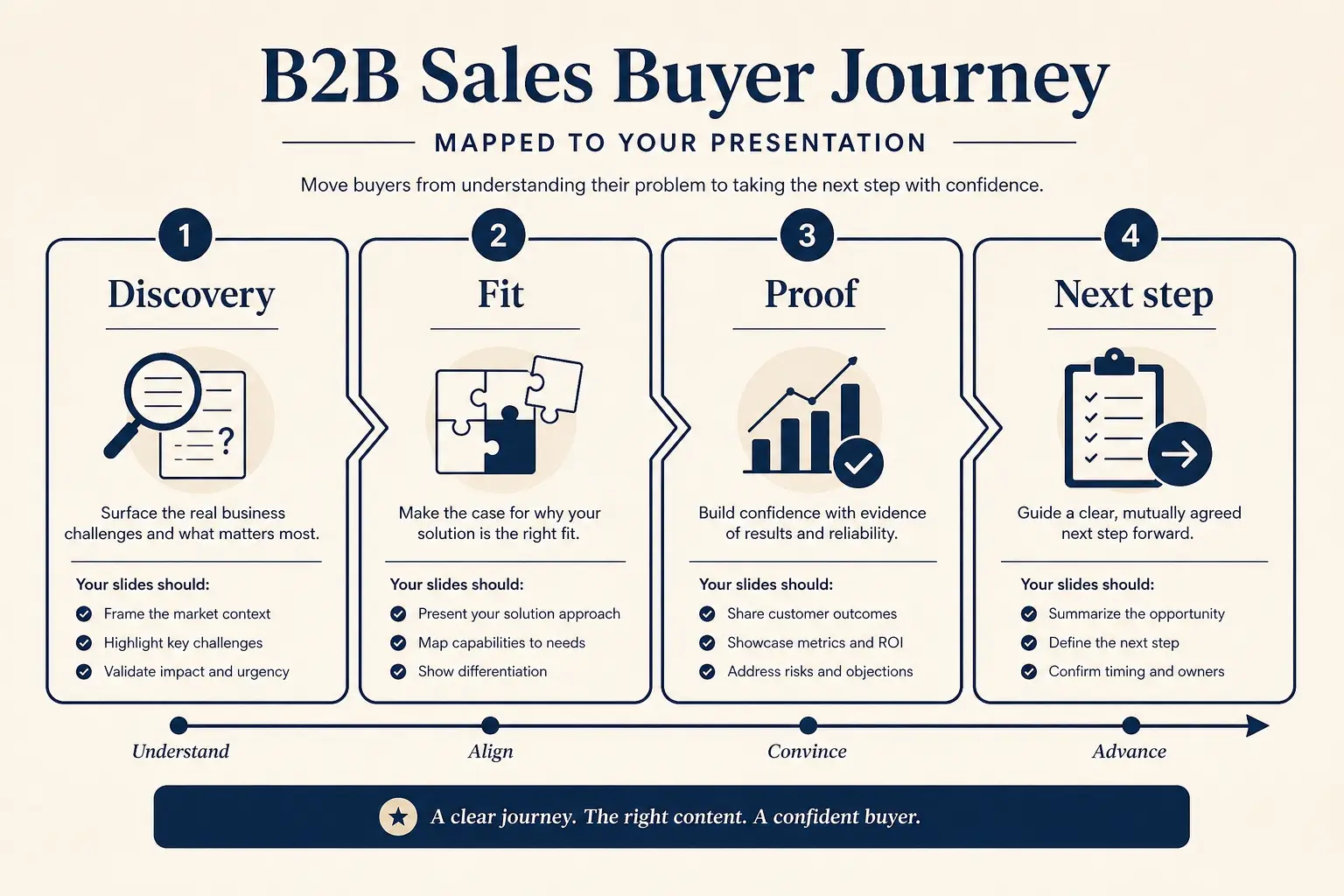
Annotated B2B SaaS sales shape: discovery language on slide one, inspectable ROI, and a mutual plan date. Use it to kill feature-catalog leave-behinds.
How to present churn in a QBR without spin
How to show churn without burying it under a green ARR arrow: cohort truth, cause, intervention, and the decision you need from the room.
ChatGPT outline to Gamma deck workflow
Keep ChatGPT as a thinking partner and Gamma as the system of record, outline handoff without pasting walls of prose onto slides.
Meeting notes to client deck the same day
Turn messy notes into a client-ready narrative: decisions, owners, open questions first, then generate. Parking lots stay out of the spine.
Fix generic AI slides that look templated
A rewrite pass for fluent nonsense: claim titles, proprietary facts, density matched to delivery mode, and deletion of template ornament.
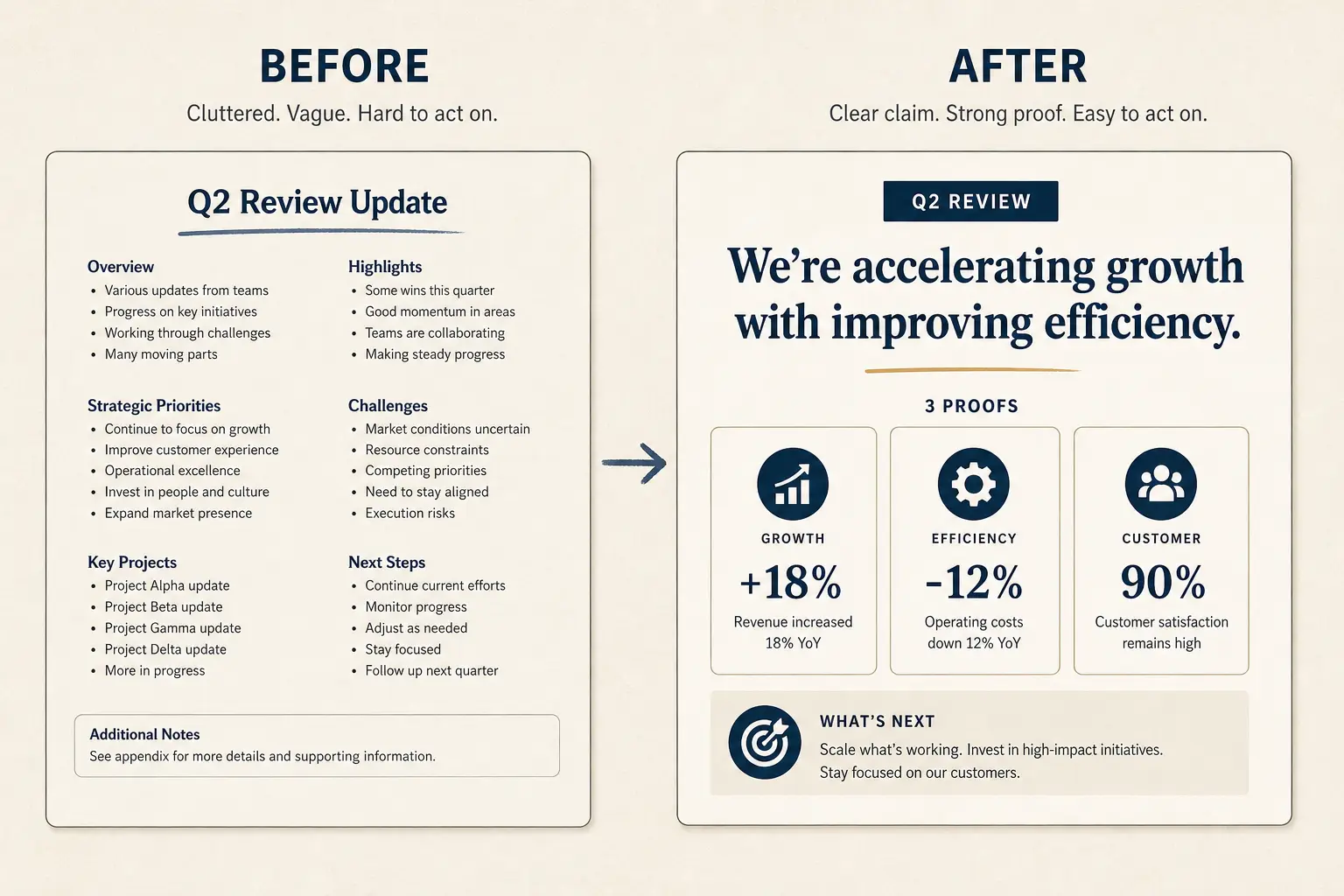
Weak slide → strong slide
Before
- • Overview
- • Features
- • Next steps???
After
- • Cost of status quo
- • Wedge in one claim
- • Proof + decision ask
Clusters you will see
- Pitch & fundraising — stage checklists, MRR slides, slide counts for short pitches.
- Sales, SaaS examples, security objections, pricing-to-deck, leave-behind vs live.
- Product & exec, QBR churn, PM review examples, exec roadmap framing.
- AI & migrations, prompts, ChatGPT handoffs, Copilot limits, Beautiful.ai/Tome paths.
- Education & workflows — class talks, thesis outlines, notes/docs to decks.
- Design fixes, generic AI slides and brand color discipline.
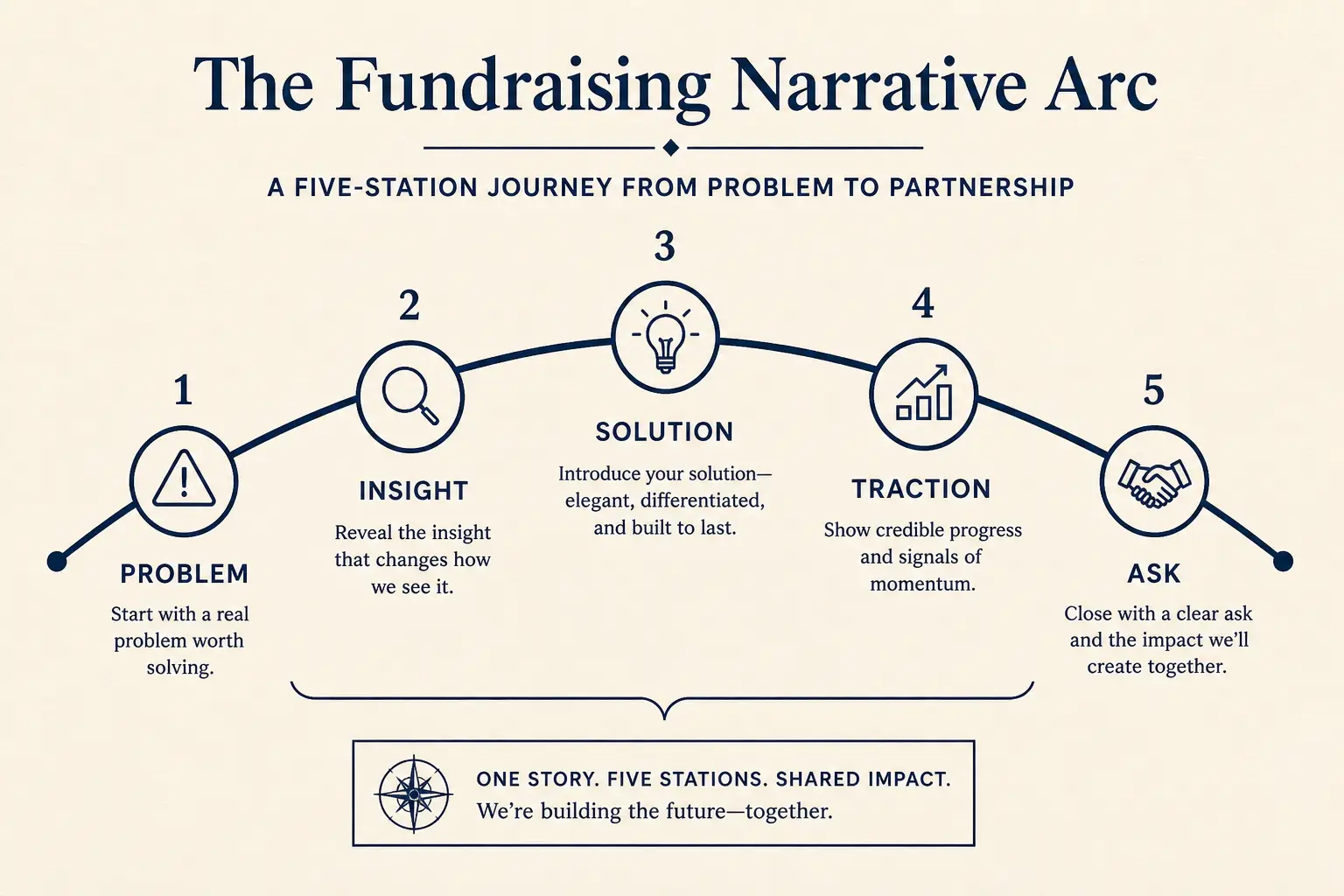
Fundraising narrative arc
Tension early. Proof before the ask. Titles should skim as a story.
All posts
Full index of live long-tails. Descriptions come from the registry; featured blurbs above add editorial guidance for the highest-leverage scenarios. New posts must clear the same quality gate as spokes: no padding, one framework, one worked example.
B2B SaaS sales deck example with structure
sales B2B SaaS sales deck example with discovery-mapped structure, pain, proof, ROI, and next steps you can reuse for similar buyers.
Beautiful.ai to Gamma migration guide 2026
ai Beautiful.ai to Gamma migration guide, what transfers, what to rebuild, and a practical workflow for moving decks in 2026.
Best AI prompts for pitch decks in 2026
ai Best AI prompts for pitch decks in 2026, stage-aware prompts that improve structure, metrics slides, and a clearer investor ask.
Best AI prompts for sales decks that convert
ai Best AI prompts for sales decks, discovery-aware prompts that keep buyer language, proof, and next steps instead of feature dumps.
Brand colors in AI presentations without chaos
design Brand colors in AI presentations, how to apply a brand kit so AI decks stay on-brand without fighting every generated layout.
ChatGPT outline to Gamma deck workflow
ai ChatGPT outline to Gamma deck, take a solid outline into editable slides without losing structure or ending up with generic filler.
Enterprise security objection slide that works
sales Enterprise security objection slide, how to handle trust, compliance, and risk questions so deals keep moving through procurement.
Fintech seed pitch deck example (annotated)
pitch Fintech seed pitch deck example with annotated slides, problem, wedge, traction, and ask patterns founders can adapt for 2026 raises.
Fix generic AI slides that look templated
design Fix generic AI slides, rewrite prompts, tighten hierarchy, and add specific proof so decks stop looking like templated filler.
Google Slides AI vs Gamma: which to use
ai Google Slides AI vs Gamma, compare structure quality, editing, and export so you pick the right tool for each deck job.
History class presentation with AI (student guide)
education History class presentation with AI, thesis, evidence, and visuals that teach the argument without generic timeline slide clutter.
How many slides for a 10-minute pitch?
pitch How many slides for a 10-minute pitch, timing budgets, must-keep slides, and what to cut so your story fits without rushing.
How to present churn in a QBR without spin
product How to present churn in a QBR, diagnose drivers, show actions, and keep the room focused on decisions instead of defensive spin.
How to present MRR growth to investors clearly
fundraising How to present MRR growth to investors, chart choices, cohort context, and narrative that makes growth look durable, not lucky.
Leave-behind deck vs live pitch: rules
sales Leave-behind deck vs live pitch, different jobs, density, and proof rules so you stop sending the wrong deck after the meeting.
Meeting notes to client deck the same day
workflows Meeting notes to client deck, turn decisions, owners, and next steps into a polished follow-up presentation the same day.
Notion doc to presentation with AI workflow
workflows Notion doc to presentation with AI, convert structured notes into editable slides while keeping headings, owners, and the core argument.
PM product review deck example for execs
product PM product review deck example, decision framing, options, tradeoffs, and recommendation slides product managers can reuse.
PowerPoint Copilot limitations (honest 2026)
ai PowerPoint Copilot limitations in 2026, where it helps, where structure breaks, and when a dedicated AI deck workspace wins.
Pricing page to sales deck conversion guide
sales Turn a pricing page into a sales deck, package tiers, value proof, and objections so buyers can champion the right plan internally.
Roadmap presentation for executives that decides
product Roadmap presentation for executives, bets vs commitments, sequencing, and tradeoffs that turn a status update into a decision.
SaaS Series A pitch deck checklist for 2026
pitch SaaS Series A pitch deck checklist, metrics depth, retention proof, GTM narrative, and ask hygiene investors expect in 2026.
Thesis defense slides outline that holds focus
education Thesis defense slides outline, question, method, findings, and implications structured so committees can follow without slide overload.
Tome alternative workflow for 2026 decks
ai Tome alternative workflow 2026, rebuild storytelling decks in an editable AI workspace with clearer export and collaboration paths.
What not to expect
This index is not a news feed. It is not affiliate roundups without a method. It is not a second homepage. If you need the product path, open the AI presentation maker. If you need craft systems, open learn hubs. If you need shapes, open examples.
Time-to-usable-deck
Blank PPT path
Outline in docs → design fight → rebuild → 3–8 hours
Outline-first AI path
Prompt → edit outline → generate → polish → minutes to first usable draft
Frameworks, worked rules, and cuts
The blog is Gamma's long-tail engine for scenario-specific decisions that do not deserve their own money page. Canonical craft systems live under learn hubs. Posts go narrower on stage, industry, persona, objection, or migration. If a post cannot change what you put on a slide this week, it should not ship. Prefer posts that name a constraint, a reusable framework, and a worked example you can recreate the same day.
Original framework for reading: Constraint, Framework, Draft. Arrive with a constraint such as Series A checklist, churn in a QBR, or ChatGPT outline into a real deck. Steal the framework. Draft in Gamma with your facts. Do not collect posts the way people collect templates. Finish one scenario end-to-end including a forced edit before you open a second long-tail.
Featured scenarios cover stage-specific pitch checklists, discovery-led SaaS sales shapes, churn presentation in QBRs, ChatGPT-to-Gamma handoffs, meeting notes to client decks, and rewrite passes for generic AI slides. Each featured blurb states the decision the post helps you make before you open the full article so you can skip reads that do not match this week's room.
Clusters you will see include pitch and fundraising, sales, product and exec, AI and migrations, education and workflows, and design fixes. When a post compares tools or migrations, cross-check claims against the public method page. Undated best-AI language without a job and a rubric is noise; dated job-based guidance is the bar.
Worked use: an AE facing a security objection opens the enterprise security objection post, steals the validation-step pattern, pastes buyer language into Gamma, and sends a leave-behind the same day. A founder preparing Series A opens the checklist post, then the seed versus Series A spoke, then drafts with real cohort evidence rather than recycled seed prose.
Failure modes include treating the blog as a news feed, publishing thin keyword pages, affiliate roundups without method, and using long-tails as a second homepage. Money pages remain product entry. Hubs remain craft systems. Examples remain annotated shapes. Climb from post to hub when you need the full system rather than a scenario patch.
Not for you if you need breaking news, if you want undated pricing tables for procurement, or if you refuse to draft after reading. Concrete next step: pick one featured scenario that matches a meeting within seven days, open the post, then generate an outline with your facts before you open a second article.
Quality bar matches spokes: one original framework or checklist, one worked example with specifics, failure modes, honest not-for-you guidance, and a concrete Gamma next step. Related links should climb into the parent hub and across to a product page without keyword soup. Measure a post by whether time-to-usable-deck for that scenario dropped.
Migration and tool-limit posts should name when to stay put. A Copilot or Beautiful.ai critique that never says who should keep the other seat is a sales page in disguise. Prefer posts that date the constraint and point at method when claims get comparative.
Education and workflow long-tails should still end in a draft action: notes cleaned into claims, thesis outline with timing, or Notion export trimmed before generate. If the post only lists tips without a recreate path, treat it as incomplete and open the matching learn hub instead.
Draft the scenario you would write about
Outline-first decks make better case studies, and better meetings.