Blog
Beautiful.ai to Gamma migration, what to rebuild vs leave behind
Beautiful.ai to Gamma migration, what to rebuild vs leave behind. This long-tail guide is for teams leaving rigid Smart Slide systems for outline-first AI drafting without pretending migration is zero-cost. You will use the Migrate Decision (inventory → rebuild spine → proof paste → theme → export test) framework, walk a worked scenario (Series B marketing team migration), and leave with prompts you can paste into Gamma, not a generic restatement of the parent hub. Parent guide: Beautiful.ai alternative.
Parent guide: Beautiful.ai alternative. Method notes: how we evaluate decks. Product entry: AI presentation maker.
Who this is for (and not for)
This page is for teams leaving rigid Smart Slide systems for outline-first AI drafting without pretending migration is zero-cost. It assumes you already understand the basics from Beautiful.ai alternative and need scenario depth: constraints, numbers, and vocabulary that generic guides skip.
Not for: readers seeking a one-size template with no proof work. Not for: inventing traction, ROI, or academic sources to fill blanks. If your job differs materially, jump back to the parent and pick a closer long-tail.
Long-tail pages exist to make decisions under constraints, not to restate hub blurbs with synonyms.
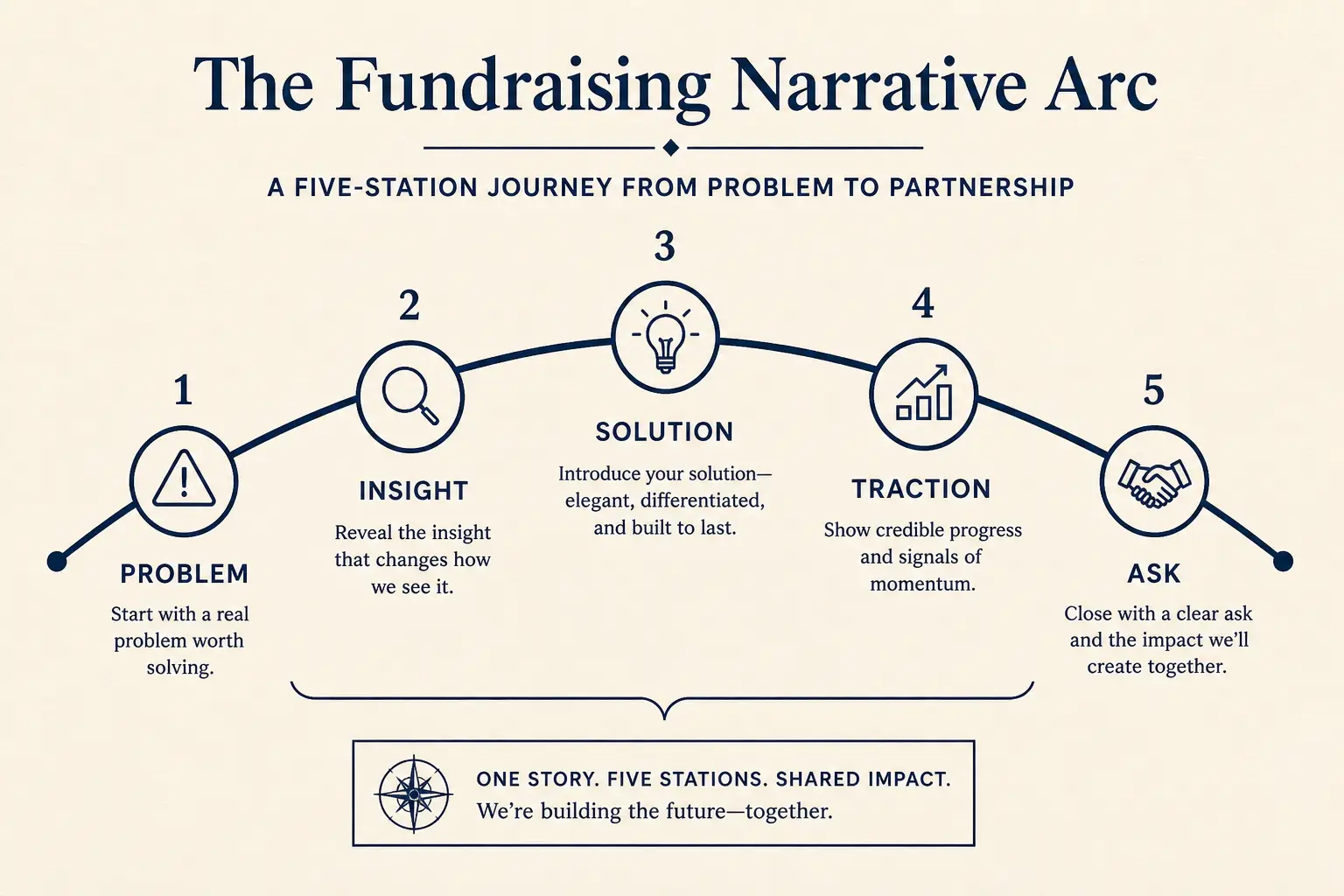
Fundraising narrative arc
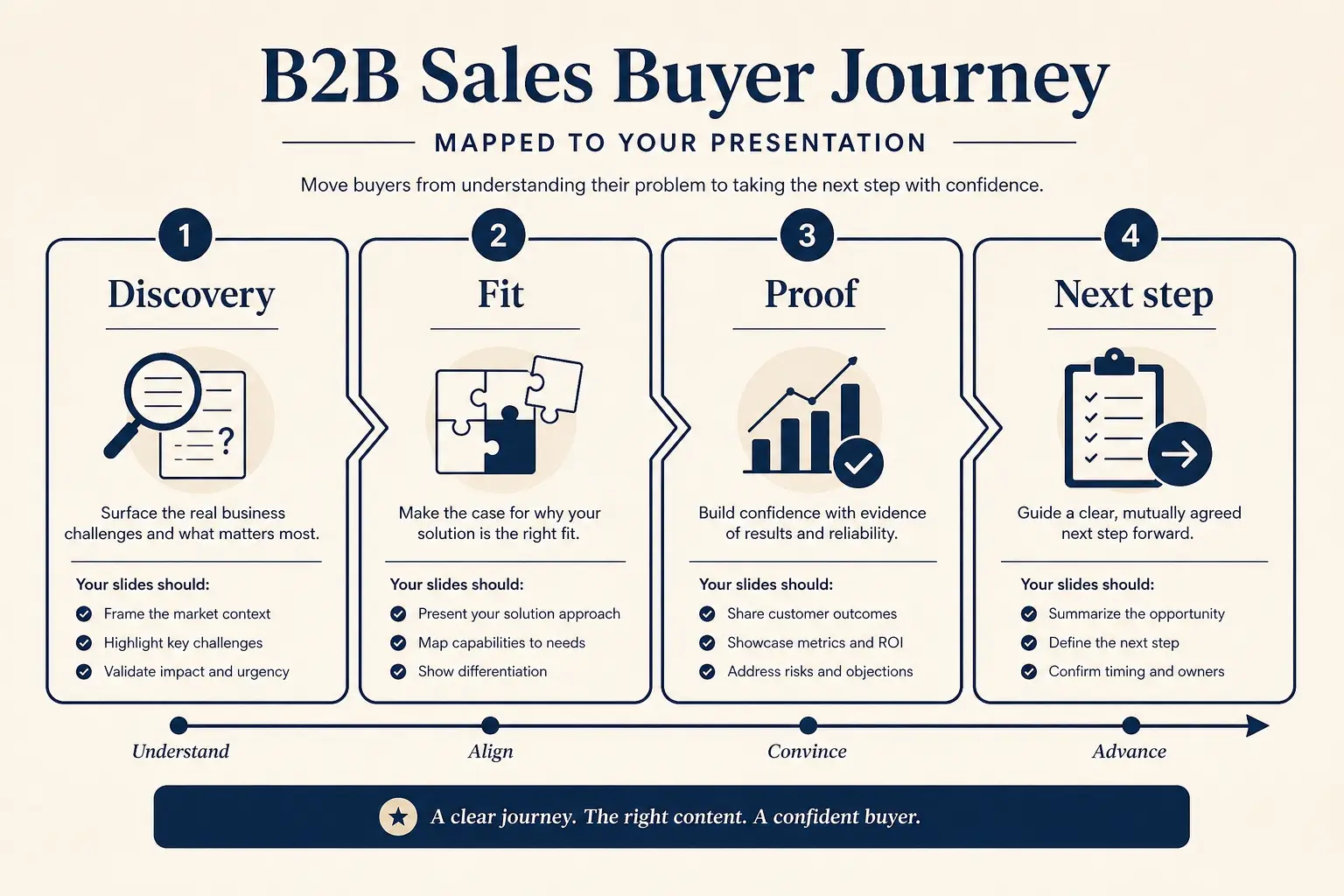
Tension early. Proof before the ask. Titles should skim as a story.
Migrate Decision (inventory → rebuild spine → proof paste → theme → export test): the operating framework
Use Migrate Decision (inventory → rebuild spine → proof paste → theme → export test) as your spine. Every section either advances the framework or earns a cut. If a slide cannot be mapped to a framework step, it is decoration.
Write the framework steps into your outline rows before generation. Attach proof status (HAVE / NEED) to each step. Name the decision or learning outcome the framework is optimizing for.
Frameworks beat vibes. Vibes produce generic AI slides; frameworks produce skimmable arguments.
Time-to-usable-deck
Blank PPT path
Outline in docs → design fight → rebuild → 3–8 hours
Outline-first AI path
Prompt → edit outline → generate → polish → minutes to first usable draft
Worked example: Series B marketing team migration
Situation: 60 Beautiful.ai decks, heavy brand kit, frustrated by structure edits. They migrate masters first, not every historical file.
Inventory: which decks are living templates vs archive. Rebuild 5 masters in Gamma outline-first. Proof modules as pasteable inventories. Export test for the one customer who needs PPTX.
Team ships new pursuits faster; archives stay in Beautiful.ai read-only, honest coexistence.
Evaluation rubric axes
Outline preview
- Narrative, open with Rebuild our sales master as outline-first:
- Body, 3–5 slides that carry the argument
- Close, summary, risks, and the ask
Preview only, Gamma expands this into editable slides.
Score a tool on Gamma’s rubric
1 = fails the job · 5 = excellent. Compare fairly, then read the method page for definitions.
Average: 3.0 / 5
Read scoring definitionsProof inventory rules
Before you prompt, list every metric, quote, figure, and constraint you are allowed to use. Paste that inventory with a use-only rule. Anything not listed becomes a blank or a cut, never fluent fiction.
Label approximate numbers as approximate. Customer quotes need attribution permission. Academic and market citations must be real and verified. If proof is missing, change the claim, do not decorate the gap.
Proof discipline is the difference between a useful AI draft and a credibility incident.
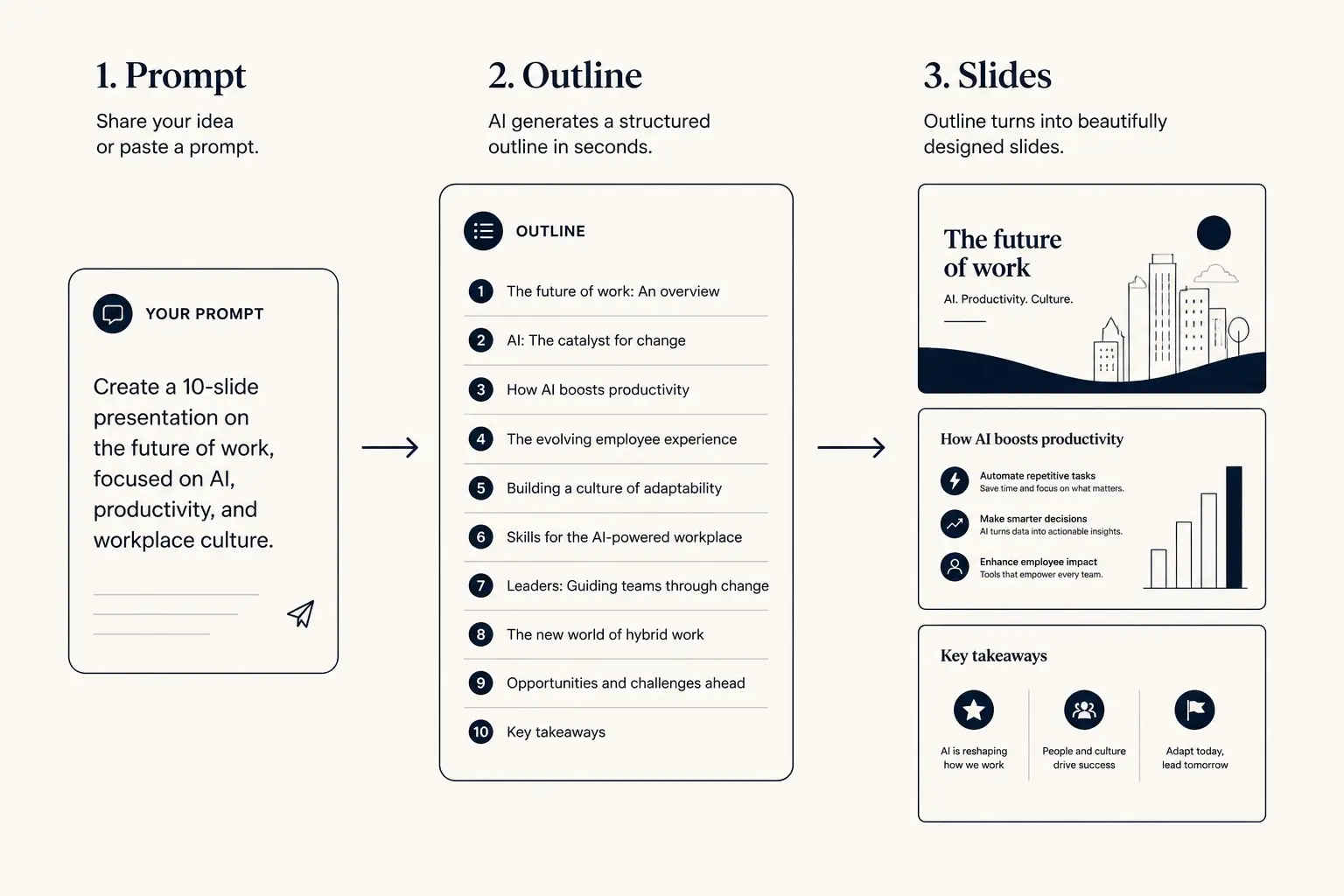
Prompt → outline → slides
1. Prompt
Audience, goal, length, proof you already have.
2. Outline
- • Opening claim
- • Proof beats
- • Ask / next step
3. Slides
Prompt pattern for this scenario
Prompt like a spec sheet: audience, stage, framework steps, slide cap, proof inventory, anti-patterns. Then open Gamma and edit titles before theme. Diff prompts fix density and tone without rerolling the whole story.
Anti-patterns to ban: invented metrics, tourism overviews, thank-you closers that replace asks, corporate filler unrelated to the scenario. Save the winning prompt as a template with placeholders, not with last quarter’s numbers baked in.
The playground below is a starting spec. Replace brackets with your real constraints.
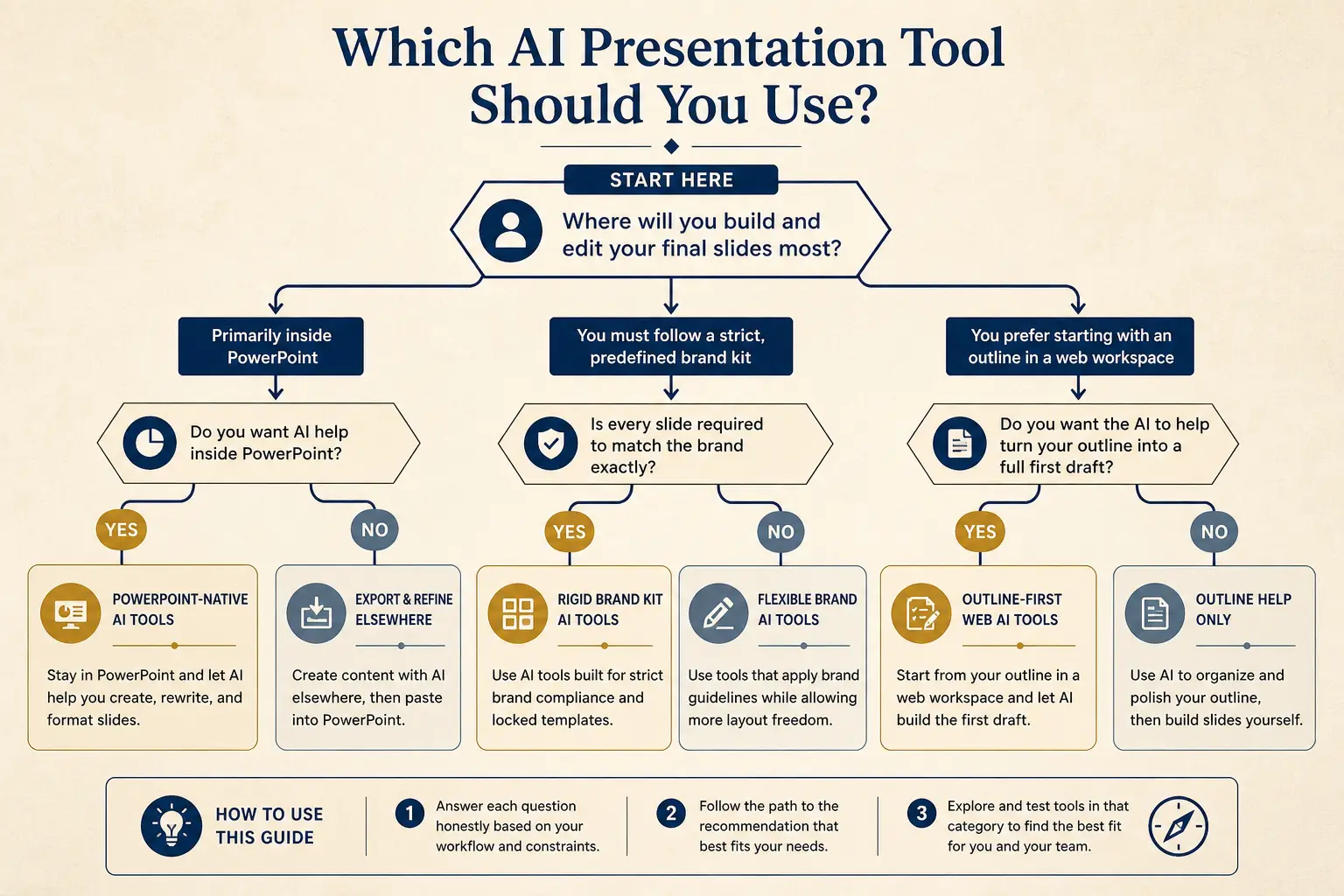
Which tool for which job
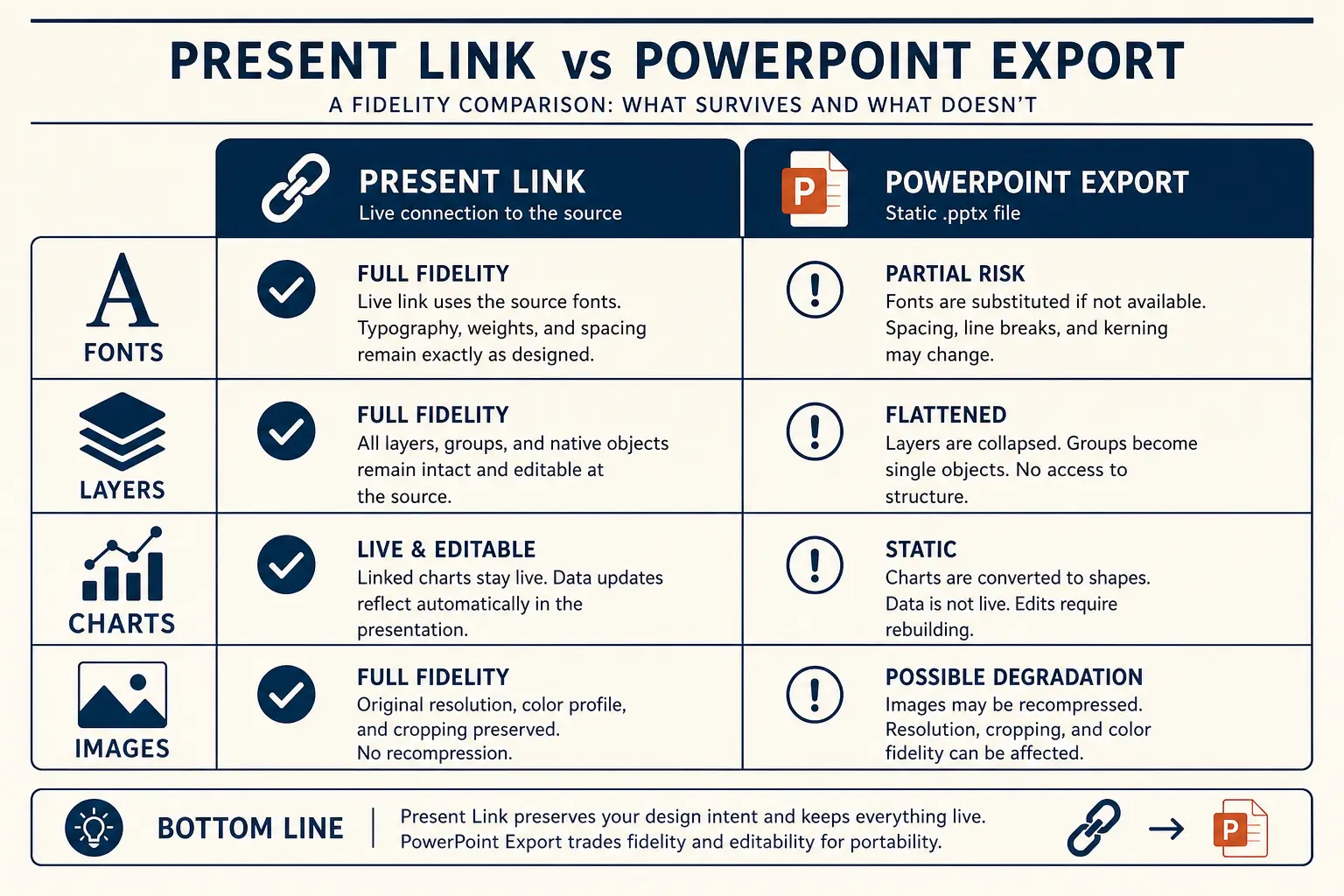
Need native PowerPoint editing every day?
Yes → Plus AI / Copilot · No → continue
Need rigid brand kits across a large team?
Yes → Beautiful.ai / enterprise kits · No → continue
Need outline-first AI drafting + present link?
Yes → Gamma
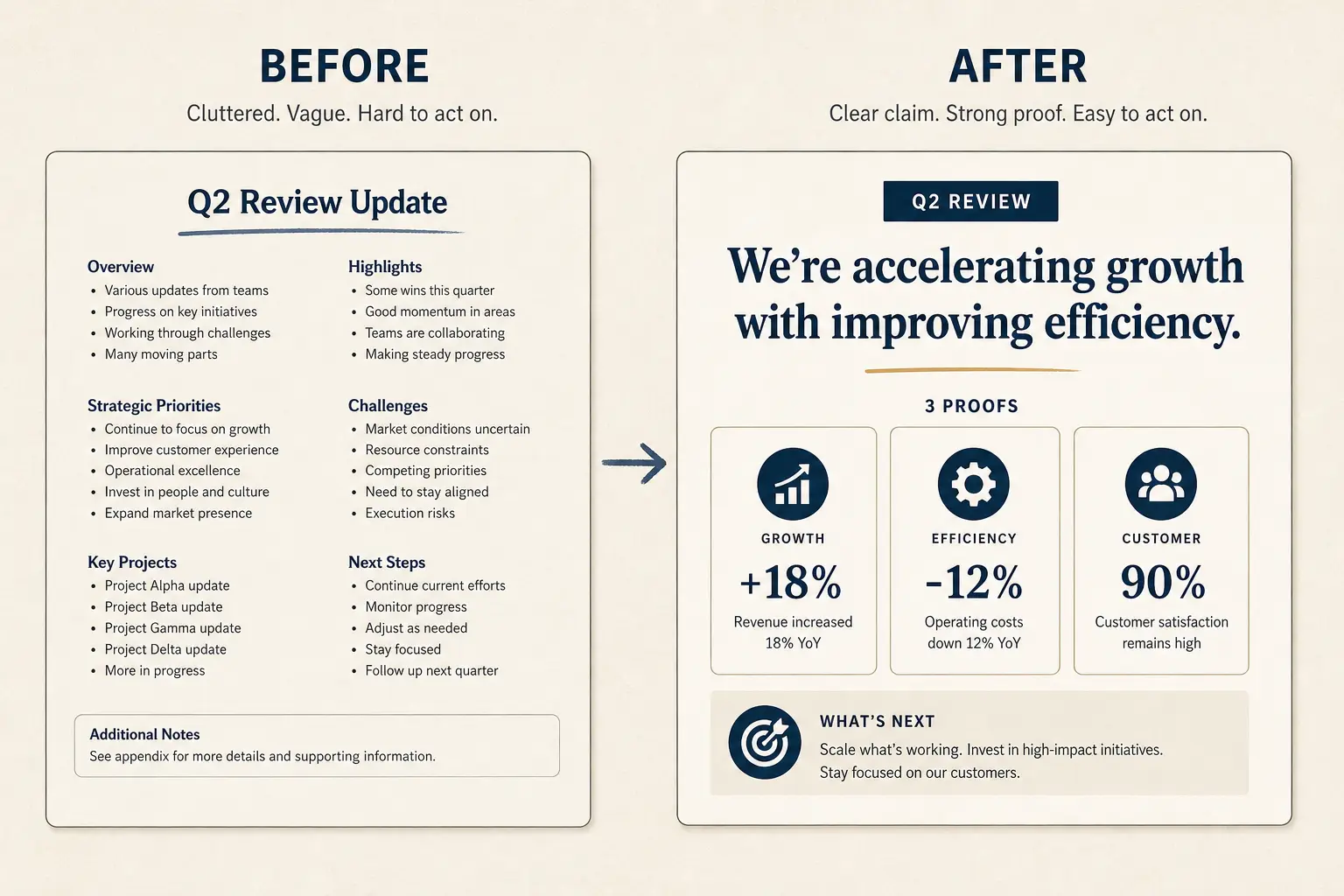
Weak bullets → claim/proof/ask
Paste a bad slide. Get a rewrite pattern you can drop into Gamma, not vibes, a structure.
- Claim: Overview (make the cost of inaction obvious)
- Proof: Context (add a number, name, or constraint)
- Proof: Details (add a number, name, or constraint)
- Proof: Next steps (add a number, name, or constraint)
- Ask: Thank you (one decision, one owner, one date)
Failure modes and what to cut
Cut ruthlessly using scenario-specific failure modes:
Cut big-bang migration of every old deck. Cut expecting pixel-identical Smart Slides. Cut skipping export tests for PPTX-required clients. Cut migrating without naming an owner.
If removing a slide would not change the decision or learning outcome, it was decoration. AI defaults to comprehensive; your job is selective.
Anatomy of a claim slide
Claim headline (one idea)
Supporting line that states the so-what for this audience.
Source / footnote
Slide budget calculator
Get a realistic slide count from meeting length and stakes, then open a matching prompt in Gamma.
14
Total slides
10
Core narrative
4
Appendix
Create a 14-slide deck for executives who skim. Meeting length: 12 minutes. Stakes: medium. Use an outline-first structure with 10 core narrative slides and 4 appendix slides. Every slide needs one claim and proof.
Open this budget in GammaLive delivery vs leave-behind density
Most scenario decks need a density choice. Live rooms want sparse claim slides. Async readers want denser leave-behinds. Twins that share claims but differ in density beat one compromised file.
Rehearse the live twin with a timer. Freeze the leave-behind when stakeholders forward artifacts. Do not ship demo-sparse slides as the only PDF for a committee.
Artifact choice belongs in the outline header alongside the framework.
Metrics and definition hygiene for Series B marketing team migration
Scenario decks die when metrics are undefined. For Series B marketing team migration, write definitions on-slide or in a footnote the skimmer can see without a narrator. If two stakeholders use the same word differently, churn, activation, completion, pipeline, resolve the definition before generation.
Put the formula or inclusion rule next to the number when the room is mixed-expertise. Label plan vs actual vs directional models explicitly. Refuse AI-invented benchmarks “for context” unless you can cite them. When a metric moved because of a one-time effect, say so adjacent to the chart, not in a buried appendix.
Definition hygiene is not pedantry. It is how teams leaving rigid Smart Slide systems for outline-first AI drafting without pretending migration is zero-cost keeps credibility when a skeptic asks a basic clarifying question.
Role split while building the Series B marketing team migration deck
Even a solo builder should simulate roles: narrative owner (claim order), fact owner (proof inventory), room owner (timing and artifact). When those roles blur, AI drafts look complete while hiding an unowned number or an untestable ask.
Narrative owner locks titles before anyone debates colors. Fact owner can veto any slide that lacks a HAVE proof row. Room owner sets minute budget and artifact and can force cuts. If you are alone, timebox each role for fifteen minutes instead of mixing them in one anxious pass.
Role splits scale from student group projects to Series A war rooms. The names change; the failure mode, unowned fiction, does not.
Checklist before you present
Confirm: framework steps are complete; proof inventory is verified; titles skim in ninety seconds; failure-mode cuts applied; artifact chosen; owners and dates exist for next steps; rehearsal done once; export tested if a file is required.
Red-flag phrases still present? Remove them. Can a skeptic misunderstand a metric definition? Fix the definition on-slide.
Checklists are boring on purpose. Boring is how scenario quality scales across a team.
Concrete next step in Gamma
Paste a playground prompt with your real proof inventory. Lock titles to Migrate Decision (inventory → rebuild spine → proof paste → theme → export test). Generate only after NEED rows are blanks you can fill. Apply cuts. Deliver via the artifact your room requires.
Return to Beautiful.ai alternative for the broader system. Use examples for shape references. Use Method when comparing tools on honesty and export.
Scenario depth is the point of this blog page. If you only needed generalities, the parent spoke would have been enough.
Operating rules for beautiful-ai-to-gamma-migration
Treat Beautiful.ai to Gamma migration, what to rebuild vs leave behind as a constrained operating problem, not a theme exercise. The constraint set on this page, audience, proof rules, artifact choice, and cut list, is what makes the guidance non-generic relative to Beautiful.ai alternative.
Write the decision or learning outcome in one sentence before you touch Gamma. Paste only proof you can defend in Q&A; blanks beat fiction. Name the artifact (present link, PDF, or PPTX) in the outline header so design stays honest. Schedule one title-only skim with a second person when stakes are external. If a section cannot map to the framework on this page, cut it rather than decorating it.
The scenario details earlier on this URL earn the long-tail ranking; these rules keep execution from drifting back to generic AI output under deadline pressure.
Edit loops that save time on beautiful-ai-to-gamma-migration
Most time waste happens after generation: endless theme tweaks while titles still fail a ninety-second skim. Invert the loop for Beautiful.ai to Gamma migration, what to rebuild vs leave behind: skim titles, fix claims, fill proof blanks, then adjust visual density for the chosen artifact.
Loop A (10 minutes): title-only skim and cuts. Loop B (15 minutes): proof fill and definition footnotes. Loop C (10–40 minutes): artifact readiness, including PPTX cleanup if required. Loop D (one pass): timed rehearsal or peer read for async leave-behinds. Stop when the decision or learning outcome is unmistakable to a skeptical reader.
If Loop C dominates every week, you are designing for the wrong artifact or carrying too much decorative hierarchy. Simplify the master instead of heroically cleaning exports forever.
Vocabulary lock for beautiful-ai-to-gamma-migration
Generic AI slides drift into vendor vocabulary. Lock the words your audience already uses, course rubric language, buyer phrases from discovery, investor metric definitions, or committee method terms, and paste that glossary into the prompt as a constraint.
Build a ten-term glossary for this scenario before generating. Ban three fluffy phrases that always appear in weak drafts for this job. Require metric definitions on-slide when a skeptic could misread a chart. Prefer audience-native verbs over interchangeable corporate verbs. Keep the glossary next to the prompt template so updates are mechanical.
Vocabulary locks are how long-tail pages stay specific. Without them, every deck collapses into the same interchangeable AI tone.
Ship bar for beautiful-ai-to-gamma-migration
Ship only when a skeptical reviewer can answer: what is the ask or learning outcome, what proof supports it, what did we cut, and which artifact is canonical. If any answer is fuzzy, you are not done, regardless of how polished the theme looks.
Ask or outcome is on a slide, not only in speaker notes. Proof inventory matches on-slide claims one-to-one. Failure-mode cuts from this page have been applied once. Permissions or file open tests completed for the delivery path. Owners and dates exist for follow-ups when the job is operational.
This bar is stricter than “looks fine.” Clear answers under skepticism are how Beautiful.ai to Gamma migration, what to rebuild vs leave behind work actually lands.
Gamma habit for beautiful-ai-to-gamma-migration
In Gamma, keep the durable habit outline-first: paste a scenario-specific prompt from this page, lock titles, generate, regenerate weak sections with diff prompts, then present or export on purpose. Do not restart from a blank vibe prompt when a long-tail spec already exists for Beautiful.ai to Gamma migration, what to rebuild vs leave behind.
Keep a team library of A-tier prompts keyed to jobs like this URL. Store proof inventories next to decks so updates are mechanical. Prefer section regen over full rerolls when one metric changes. Link Beautiful.ai alternative from your internal wiki so people escalate to systems when they outgrow this scenario. Re-read Method when tool debates appear, architecture arguments need shared axes.
Day-to-day excellence is boring repetition of good constraints. This page supplies the constraints for one job; Gamma supplies the editable structure to execute them quickly.
Field notes 1 for beautiful-ai-to-gamma-migration
When teams apply Beautiful.ai to Gamma migration, what to rebuild vs leave behind in the wild, the same friction shows up: rushed prompts, missing proof inventories, late artifact switches, and reviews that argue about taste instead of decisions. Field note 1 is a corrective habit, small enough to run weekly, strict enough to prevent cleanup debt.
Habit: freeze a proof inventory before any generate click, even when the calendar is cruel. Habit: run a ninety-second title skim with someone who was not in the working session. Habit: write the artifact choice in the outline header and refuse layout work that contradicts it. Habit: cut twenty percent after first rehearsal or first async read, on purpose. Habit: log one failure mode from this page that you actually hit, and patch the team template. Habit: prefer section regen with updated proof over full rerolls that reshuffle a working spine.
These habits are not motivational posters. They are the difference between AI that compresses work and AI that creates a second shift of cleanup. Attach them to Beautiful.ai alternative rituals so they survive personnel changes.
Field notes 2 for beautiful-ai-to-gamma-migration
When teams apply Beautiful.ai to Gamma migration, what to rebuild vs leave behind in the wild, the same friction shows up: rushed prompts, missing proof inventories, late artifact switches, and reviews that argue about taste instead of decisions. Field note 2 is a corrective habit, small enough to run weekly, strict enough to prevent cleanup debt.
Habit: freeze a proof inventory before any generate click, even when the calendar is cruel. Habit: run a ninety-second title skim with someone who was not in the working session. Habit: write the artifact choice in the outline header and refuse layout work that contradicts it. Habit: cut twenty percent after first rehearsal or first async read, on purpose. Habit: log one failure mode from this page that you actually hit, and patch the team template. Habit: prefer section regen with updated proof over full rerolls that reshuffle a working spine.
These habits are not motivational posters. They are the difference between AI that compresses work and AI that creates a second shift of cleanup. Attach them to Beautiful.ai alternative rituals so they survive personnel changes.
Field notes 3 for beautiful-ai-to-gamma-migration
When teams apply Beautiful.ai to Gamma migration, what to rebuild vs leave behind in the wild, the same friction shows up: rushed prompts, missing proof inventories, late artifact switches, and reviews that argue about taste instead of decisions. Field note 3 is a corrective habit, small enough to run weekly, strict enough to prevent cleanup debt.
Habit: freeze a proof inventory before any generate click, even when the calendar is cruel. Habit: run a ninety-second title skim with someone who was not in the working session. Habit: write the artifact choice in the outline header and refuse layout work that contradicts it. Habit: cut twenty percent after first rehearsal or first async read, on purpose. Habit: log one failure mode from this page that you actually hit, and patch the team template. Habit: prefer section regen with updated proof over full rerolls that reshuffle a working spine.
These habits are not motivational posters. They are the difference between AI that compresses work and AI that creates a second shift of cleanup. Attach them to Beautiful.ai alternative rituals so they survive personnel changes.
Frequently asked questions
Build the Series B marketing team migration deck in Gamma
Apply Migrate Decision (inventory → rebuild spine → proof paste → theme → export test) with your real proof inventory, then present or export on purpose.