Exec & board
AI board deck that survives the room
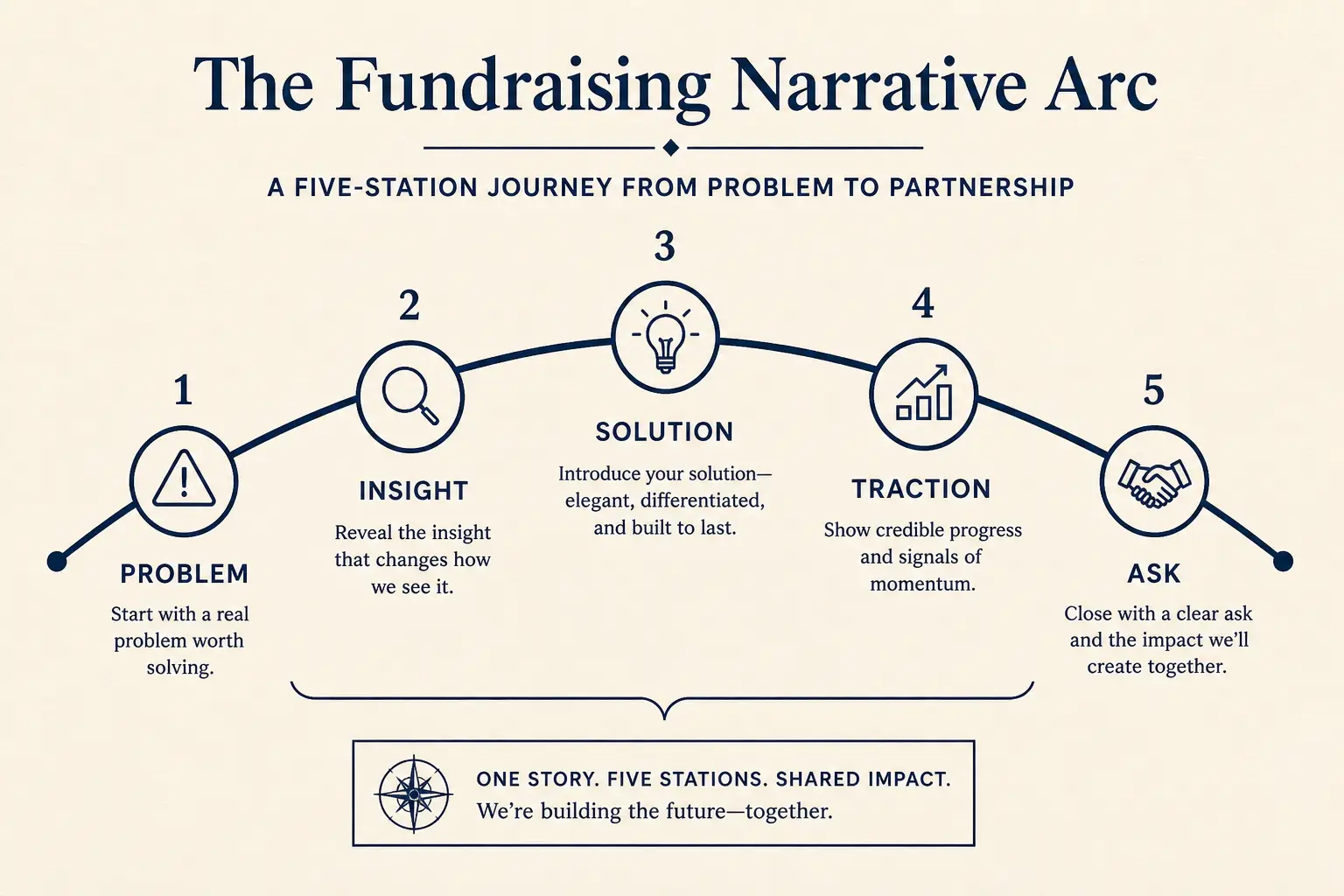
Gamma helps you draft an AI board deck around scorecards, variance, risks, and explicit asks—not a highlight reel. Outline the decisions first, paste real numbers, then present or export a packet directors can pre-read without guessing what you want.
Who this AI board deck workflow is for
Use Gamma when you prepare quarterly boards, monthly investor-director hybrids, or executive product and strategy reviews that need a decision. It fits founders, chiefs of staff, FP&A partners, and product leaders who already have the numbers but need a narrative spine that does not hide variance. The shared pattern is scarce attention, fiduciary tone, and explicit asks.
- Founders building board packets under time pressure between operating meetings.
- Chiefs of staff turning operating reviews into director-ready narratives.
- Product leaders running ship decisions with eng and design executives.
- FP&A partners who need variance stories that match the model, not vibes.
Not for you if…
Skip AI generation if you intend to bury misses under vanity metrics—the room will notice. Skip Gamma as final packaging if legal requires a locked corporate master for every board file. And if the meeting is truly a working session with whiteboards only, do not force a thirty-slide packet; write a one-page decision memo instead.
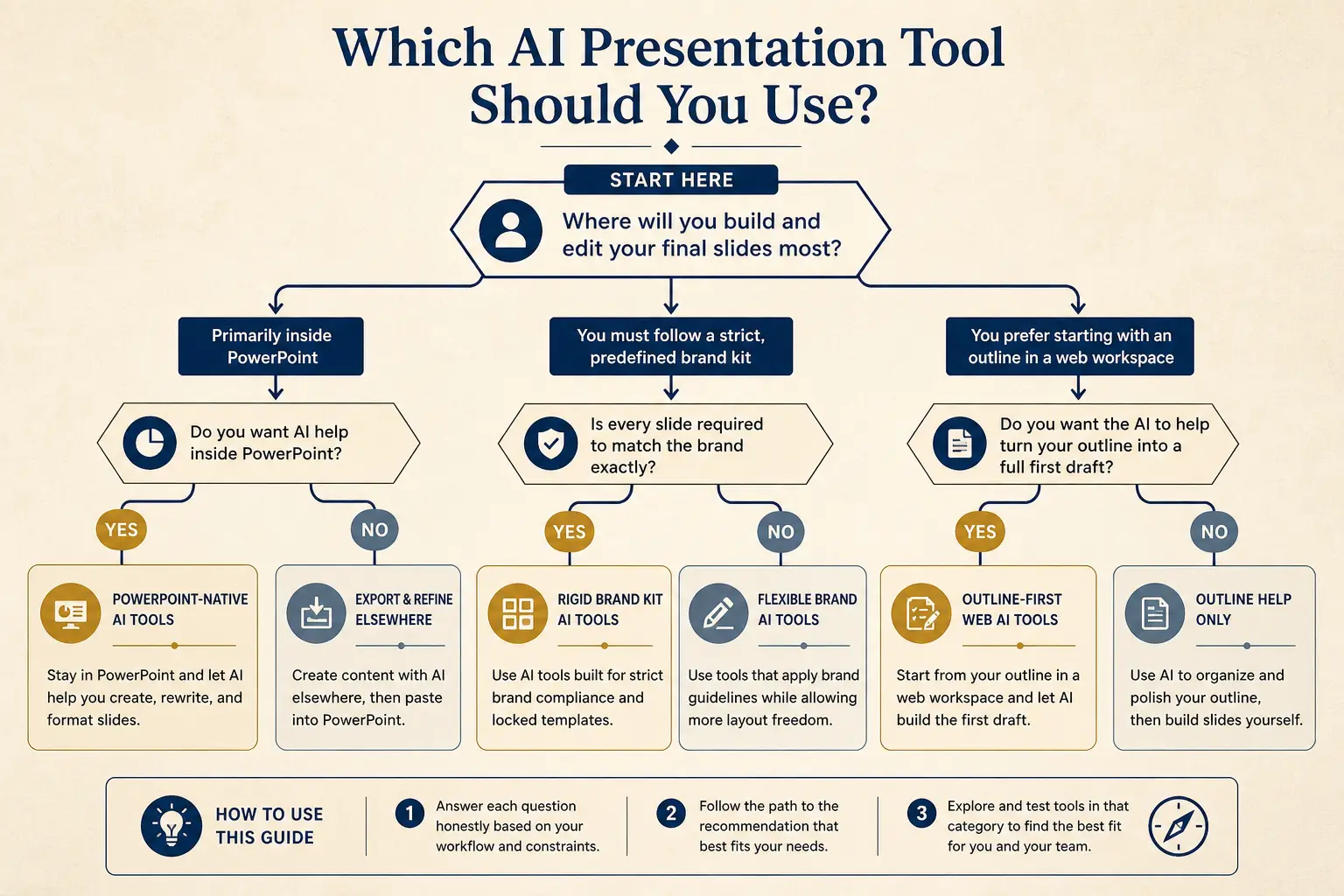
What deck are you actually making?
Three questions. One recommended path, no generic “it depends” fog.
The SCORE framework for board and exec decks
SCORE is the preflight before you generate: Scorecard versus plan, Context that changed, Options on the table, Risks with owners, Exact asks. Board decks fail when they are only Scorecard or only Context. AI will happily draft a cheerful tour if you omit Options and Exact asks. Write SCORE in six to ten sentences, then expand. Titles must still work in a pre-read without your voice.
- Scorecard, actual versus plan for the few metrics directors track.
- Context, material changes since last meeting, not a company history.
- Options, decisions with tradeoffs, not a single buried recommendation.
- Risks, likelihood, impact, owner, and mitigation date on each row.
- Exact asks, approvals needed today, with implications if deferred.
Evaluation rubric axes
How Gamma builds a board packet
- Brief with SCORE and real actuals versus plan.
- Outline for core path plus appendix markers for deep dives.
- Slides edited for claim titles and decision tables.
- Pre-read export if needed; present link for interactive discussion.
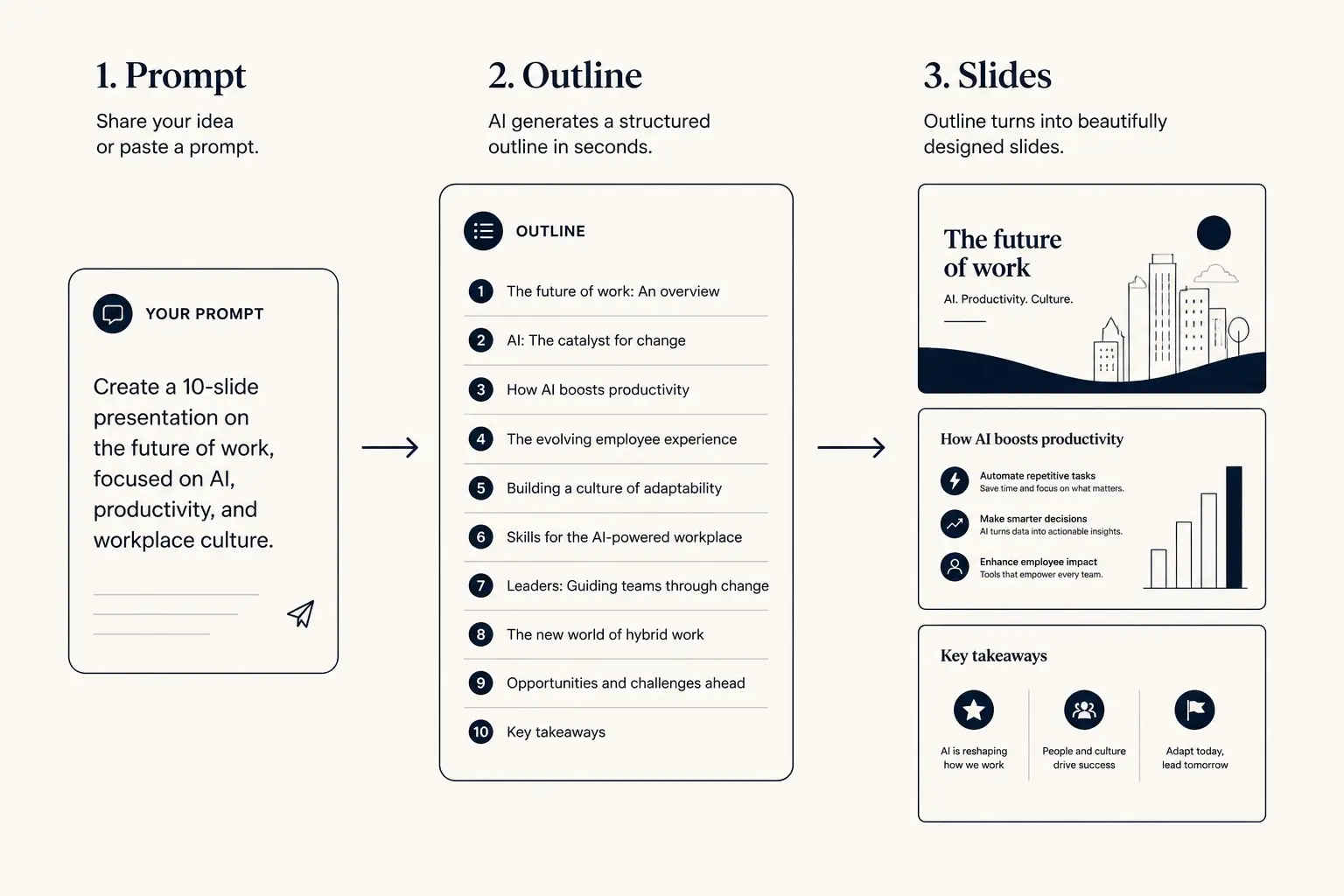
Prompt → outline → slides
1. Prompt
Audience, goal, length, proof you already have.
2. Outline
- • Opening claim
- • Proof beats
- • Ask / next step
3. Slides
Outline preview
- Narrative, open with Board deck for a Series B
- Body, 3–5 slides that carry the argument
- Close, summary, risks, and the ask
Preview only, Gamma expands this into editable slides.
Time-box the packet
A ninety-minute board with pre-read differs from a thirty-minute exec review. Set minutes and stakes so the model does not invent a tour.
Slide budget calculator
Get a realistic slide count from meeting length and stakes, then open a matching prompt in Gamma.
18
Total slides
13
Core narrative
5
Appendix
Create a 18-slide deck for executives who skim. Meeting length: 40 minutes. Stakes: high. Use an outline-first structure with 13 core narrative slides and 5 appendix slides. Every slide needs one claim and proof.
Open this budget in GammaWorked example: Series B quarterly board
Company: B2B SaaS, Series B. Metrics versus plan: ARR $28.4M versus $30.0M plan, NRR 112 percent versus 115 percent, net burn $1.9M versus $2.2M, runway 19 months, pipeline coverage 3.1x versus 3.5x target. Two asks: approve hiring plan adding twelve quota-carrying AEs in Q4, and approve a pricing experiment on enterprise annual prepay. Risks: one enterprise concentration at 14 percent ARR, and a reliability incident last month with a completed RCA.
Core path: scorecard with red/yellow variance called out in titles, what changed in enterprise cycle times, GTM bet and hiring ask, pricing experiment design and success metrics, product reliability update with RCA summary, cash and runway, risk register, closed asks restated. Appendix: cohort charts, competitive notes, detailed financials. Do not open with a ten-slide product tour. Do not hide the ARR miss under a logo collage. Put both asks on a single slide early, then support them.
| Slide | Title claim | Number directors see |
|---|---|---|
| Scorecard | ARR $1.6M below plan; burn better than plan by $0.3M | ARR, plan, burn, runway on one scoreboard |
| Hiring ask | Approve 12 AEs to restore coverage without blowing burn guardrails | Headcount cost, pipeline coverage, payback assumption |
| Risk | Top customer is 14 percent ARR; mitigation owner named | Concentration percent and diversification plan date |
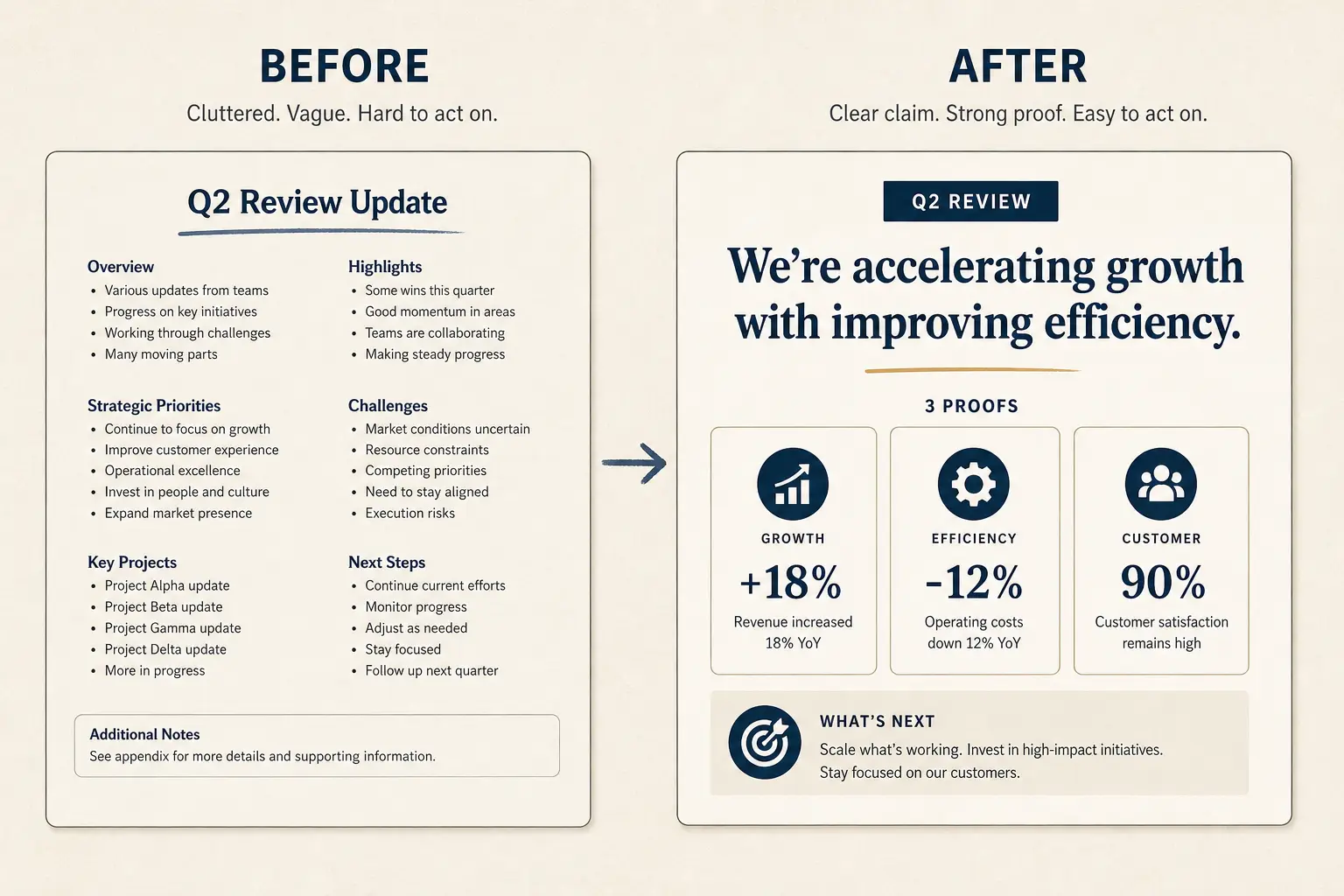
Anatomy of a claim slide
Claim headline (one idea)
Supporting line that states the so-what for this audience.
Source / footnote
Pre-read versus live discussion
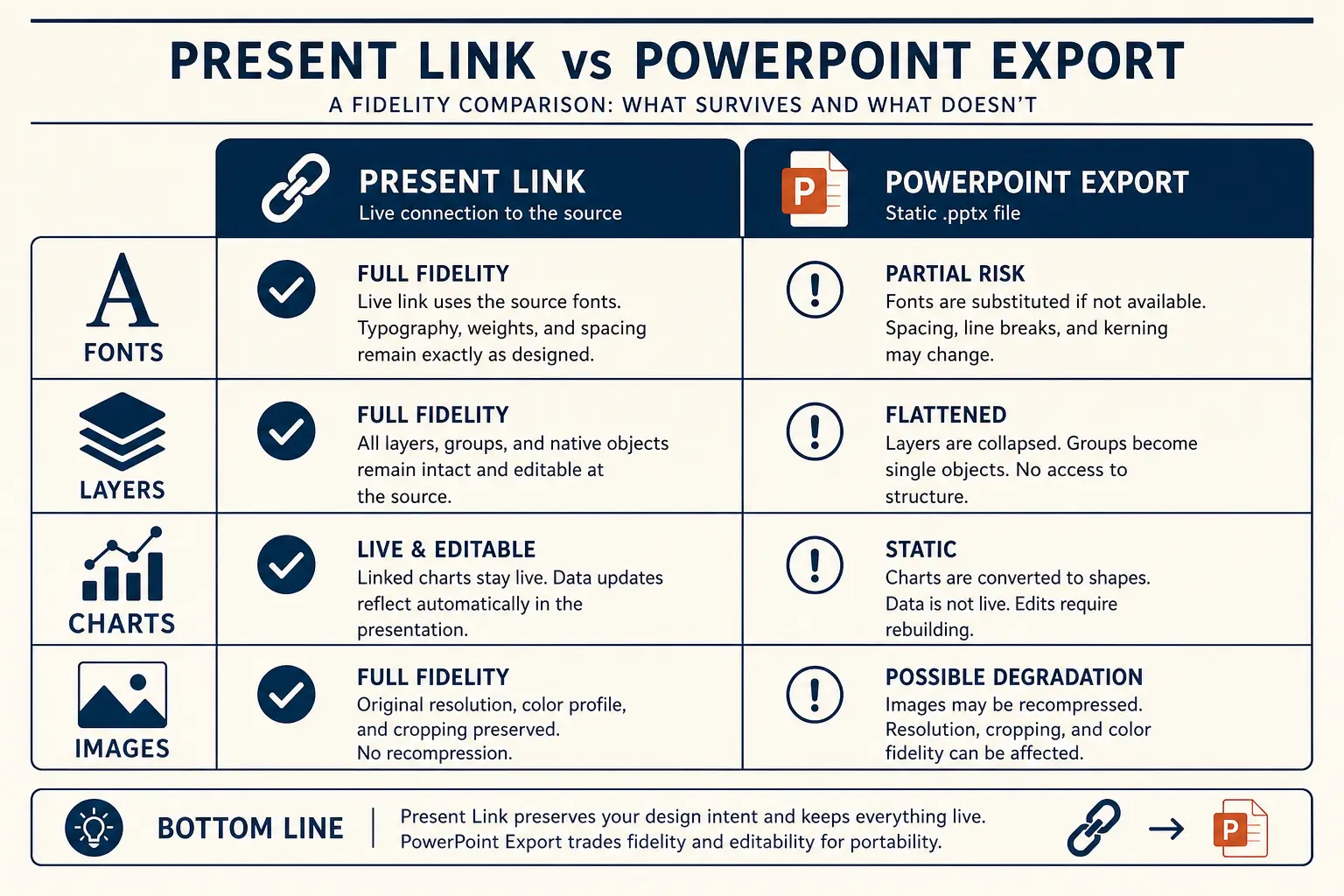
If directors pre-read, write denser scorecards and move storytelling to short context slides. If they do not pre-read, keep the live path sparer and assume titles must carry the meeting. Either way, put asks where time remains for debate. Export a packet when minutes and archives require a file; present from a link when numbers may update the morning of the meeting.
Slide density spectrum
Sparse
Live stage
1 claim, huge type
Balanced
Default
Claim + 3 proofs
Dense
Leave-behind
Detail for async read
Present link vs PPTX fidelity
Present link
- • Live latest edits
- • Best for your room
- • Analytics-friendly
Export PPTX / PDF
- • Offline / procurement
- • Brand review in PPT
- • Expect cleanup passes
Mini comparison: board tooling
| Job | Gamma | Elsewhere |
|---|---|---|
| Decision narrative | Outline-first SCORE spine with editable asks | Slide tourism in generic AI tools without asks |
| Locked board template | Draft then package if required | PowerPoint masters when governance demands them |
| Financial model | Summarize claims from the model | Own the spreadsheet as source of truth always |
Editing ritual before you send pre-read
- Title-only read: every miss must appear in a title, not only a chart.
- Asks slide: count the decisions; if zero, you built an update, not a board deck.
- Risk register: every row needs owner and date.
- Appendix: move deep dives so the core path stays discussable.
- Number freeze time: state when actuals were pulled so late edits are conscious.
Failure modes directors punish
- Cheerleading that hides variance versus plan.
- No explicit asks until the last thirty seconds.
- Risks without owners or mitigation dates.
- AI-invented metrics that disagree with the financial packet.
- Product tourism unrelated to governance decisions.
- Mixing raise narrative into fiduciary reporting without labeling it.
- Forty dense slides for a discussion that needed seven decision frames.
- Pre-read sent so late that directors arrive cold and punish the deck.
Related craft lives under product reviews and fundraising hubs in Learn. For monthly investor letters rather than board governance, use the AI investor update page. For a reusable decision spine, start from the product review template or browse the templates library. Score tools with Method when you are still choosing software.
Operating cadence around board packets
Strong board packets are an operating system, not a last-minute slide panic. Freeze metrics at a stated timestamp, lock the ask list forty-eight hours before pre-read when possible, and keep a running risk register that does not reset to green every quarter without evidence. AI can draft the narrative spine quickly, but cadence is what makes directors trust the packet. If actuals arrive late, say so on the scorecard slide rather than silently mixing dates.
Chiefs of staff should maintain a standing SCORE outline in Gamma and duplicate it each cycle. Replace numbers, rewrite variance titles, and only regenerate sections when strategy changes. Continuity helps directors skim. Whiplash redesigns make misses easier to hide and harder to track across quarters. Put both asks on one early slide even if supporting detail comes later.
When product, GTM, and finance disagree on a narrative, resolve the disagreement before generation. AI will paper over conflict with smooth language that collapses under the first director question. Hold a thirty-minute alignment meeting on variance and asks, then brief Gamma. The deck should reflect one company voice, not three patched stories.
Pre-read discipline matters as much as slide craft. Send packets with enough time for questions in writing. If directors arrive cold, even excellent SCORE structure turns into theater. For interactive strategy sessions, keep a sparer live path and park diligence in appendix. For archival governance, export a file and name versions clearly so minutes match the artifact discussed.
Tie hiring and pricing asks to guardrails directors already approved. If burn must stay under a line, show the hiring plan against that line. If pricing experiments need customer cohort limits, put those limits on the ask slide. AI will happily draft ambitious asks without constraints unless you paste the constraints. Constraint honesty is part of fiduciary tone.
After the meeting, capture decisions as dated outcomes and feed them into the next packet’s opening context. Closed asks should not reappear as open suggestions. This closed-loop habit is where AI board deck workflows compound: each cycle starts from truth rather than from a blank celebration reel.
Directors also punish inconsistent definitions across packets. If NRR calculation changes, explain it on the scorecard. If pipeline coverage methodology shifts, say so beside the number. AI will not notice definition drift unless you write it into the brief. Definition hygiene is part of building an AI board deck directors can trust across quarters.
For executive product reviews that are not full board meetings, keep SCORE but shrink governance theater. Focus on the decision slate and the operational risks that change the recommendation. The AI board deck craft still applies; the audience and fiduciary scope simply narrow. Do not paste a full company scoreboard into a feature ship review without cause.
Frequently asked questions
Draft a board spine that decides
Open Gamma with SCORE sentences and real actuals. Put asks on a slide early, then support them with proof.